
Should Sacred Texts Be Updated and Interpreted for Modern Values?
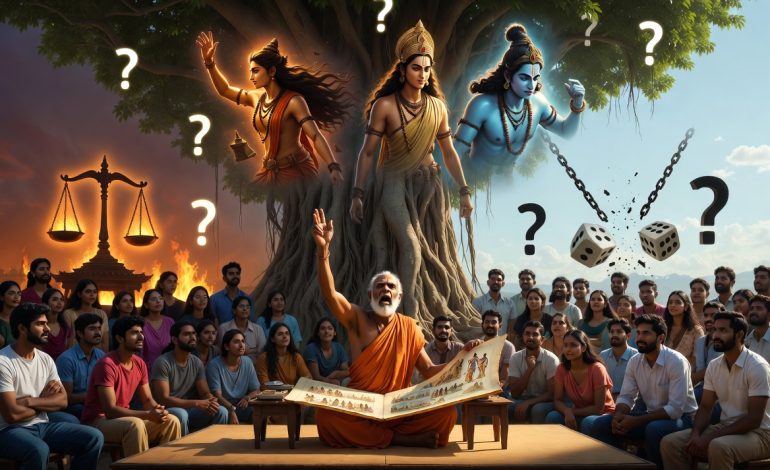

Navigating tension between tradition and modern values
Every generation inherits stories to construe world view and understanding of the world. Some of these stories are literary classics, while several others have acquired status of religious texts, which have continued to be revered as divine revelation. With the evolution of societies, some complex and intriguing questions emerge: what happens when ancient teachings appear in contradiction with contemporary values. Should sacred text be updated consistent with modern ideas of equality, human rights, gender and social justice? This debate cannot be simply reduced into the confinement of theology, as it sits at the intersectionality of literature, religion and society.
Scared text as living document
Religion is largely seen as a system that defines ways of living and therefore, it is accountable for answering questions related to worldview. Arguably, religious traditions cannot exist in a vacuum. Emergence of sacred text took place within specific historical and cultural settings. Almost all religious texts, including, Bible, Quran, Bhawat Gita, Buddhist scriptures and Torah, reflect moral, social and spiritual concerns of their time. Many such traditions claim that their path of living with morality and dharma (righteousness) is uniquely true. Yet, in today’s globalised and multicultural world, these religious scriptures remain silent on how societies should navigate religious diversity. While each religion serves the function of moral compass, it cites stories, expounding both the origin of the universe and where we are heading. Why is there a huge discord between religious world views and modern, secular and neo-liberal world views? It is important to contend that major religion emerged in ancient times, making it difficult to reflect upon societal evolution.
The clash between religious world-views and neo-liberal world views
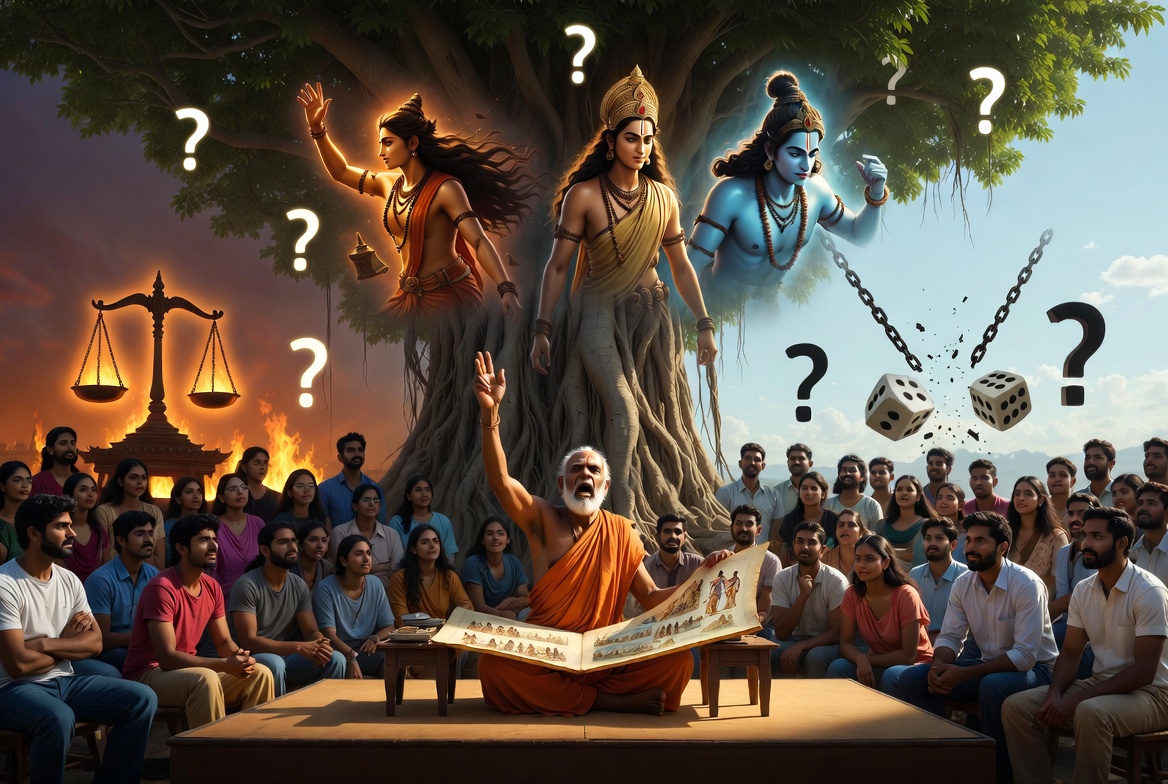
Consider the example of the Mahabharata epic, there appeared a moment, which determined not only the fate of civilisation but also charted a new discourse to morality and ethics. Arjuna asks Krishna to place the chariot between two armies. Arjuna sees teacher, cousins, relatives and friends in the battlefield and his confidence suddenly collapses; his hand trembles and his famous bow slips out of hind hand. Arjuna refuses to accept war because of its disastrous consequence. Although Krishna is an avatar of Vishnu, viewing the Mahabharata through Arjuna’s eyes makes it a profound story of human becoming — how an individual confronts chaos, receives guidance, and acts with purpose. Krishna illuminates the path, but Arjuna walks it. Hitherto, interpretation of epic Mahabharata has remained Krishna centric. Characters like Draupadi in the Mahabharata openly challenge authority and question injustice. Feministic interpretation of epics such as Ramayana and Mahabharta is completely absent from mainstream discourse. Sita can be viewed as a figure of courage, personal dignity and moral strength. Ironically, mainstream patriarchal interpretation of Ramayan has made Sita a figure of passive obedience.
The case of reinterpretation
Many religious traditions have already adapted. Christianity largely moved past Old Testament endorsements of slavery through theological development and cultural pressure. Mainline Protestant denominations have re-examined passages on women’s leadership and same-sex relationships. Islamic reformers point to principles of justice and mercy in the Quran to argue against rigid applications of hudud punishments or certain inheritance laws. Jewish thought has rich traditions of midrash and commentary that reinterpret Torah for new eras. Hinduism offers rich illustrations of the debate over updating or reinterpreting sacred texts. Unlike some Abrahamic traditions with a more centralized canon, Hindu scriptures include Śruti (revealed, like the Vedas and Upanishads) and Smṛti (remembered, like epics, Puranas, and law books). This diversity has historically allowed significant interpretive flexibility. Nevertheless, many illiterate or semi-literature kathawachaks have continued to focus on idealised Bhakti orientation and idealised female role such as Pativrata (Devoted wife). They have grossly failed to interpret the epics (Ramayana and Mahabharata) in ways fully aligned with modern values such as gender equality, consent, individual rights, anti-caste discrimination, rationality, and ethical nuance
Why This matters
In a pluralistic world, how we handle sacred texts affects everything from personal belief to public policy—debates over education, bioethics, family law, and free speech. Dismissing them as outdated relics ignores their psychological and cultural power. Treating them as infallible blueprints for 21st-century life creates unnecessary conflict with evidence and human flourishing. The real conflict is often not between religion and reality, but between older interpretations and changing social realities.