


Advaita Vedanta and Islam
Advaita Vedanta’s conception of Nirguna Brahman, or the ultimate reality beyond attributes, has striking similarities to the Islamic conception of Allah as utterly transcendent, incomparable, and beyond the limitations of human imagination. The resemblance becomes especially interesting when we look beyond popular religious imagery and examine what each tradition says about the ultimate nature of God or reality.
However, there is an equally important distinction: Advaita Vedanta and Islam can sound remarkably similar when describing God’s transcendence, yet differ fundamentally over whether the ultimate reality is identical with the deepest self of the human being and whether God is a personal creator distinct from creation.
Let’s explore the philosophical parallels carefully.
- Nirguna Brahman and Allah: the ultimate beyond human comprehension
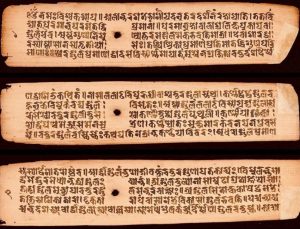
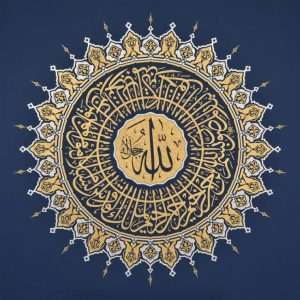


Nirguna Brahman
The absolute reality without limiting attributes, distinctions, or forms. Brahman cannot be fully captured by concepts, names, or sensory representations.
Islam
Allah, beyond all likeness
God is incomparable to creation, not contained by material form, and not adequately represented by human imagination.
The closest parallel lies in the rejection of anthropomorphism: the idea that the ultimate reality should be imagined as a magnified human being or a physical object somewhere in the universe.
In Advaita Vedanta
The Upanishadic tradition uses expressions such as neti, neti — “not this, not this” — to indicate that Brahman cannot be adequately defined through ordinary descriptions.
The Brihadaranyaka Upanishad (2.3.6) is particularly associated with this approach. Whatever finite characteristic we attribute to the absolute, that characteristic cannot exhaust what Brahman is.
In Islam
The Quran declares:
“There is nothing like unto Him.” — Quran 42:11
It also states:
“Vision perceives Him not, but He perceives all vision.” — Quran 6:103
These passages establish a strong conception of divine incomparability (tanzih). Allah is not one object among other objects, nor can He be reduced to a bodily image within the universe.
The philosophical similarity: both traditions challenge the assumption that the highest reality can be understood as an ordinary object with familiar physical properties.
There is, however, a difference in emphasis. Advaita uses the language of nirguna to indicate that Brahman is free from limiting attributes. Islamic theology generally affirms God’s names and attributes while denying that they resemble created things. In other words, Islamic divine transcendence does not necessarily mean that God has no attributes.
- Tawhid and Advaita: the unity of ultimate reality
One of the strongest points of comparison is between tawhid, the oneness of God in Islam, and advaita, the non-duality of Brahman in Advaita Vedanta.
The two traditions both challenge the idea that ultimate reality can be understood as one finite being alongside other independent beings. But they mean different things by unity.
| Concept | Advaita Vedanta | Islam |
| Ultimate reality | Brahman, non-dual and without a second | Allah, absolutely one and unique |
| Fundamental principle | Advaita — non-duality | Tawhid — divine oneness |
| Status of plurality | The world of distinctions has no independent ultimate reality apart from Brahman | Creation is distinct from God and depends entirely on Him |
| Divine incomparability | Brahman transcends finite conceptual distinctions | Allah has no likeness among created things |
| Human spiritual goal | Realisation of the identity of Atman and Brahman | Worship, knowledge of God, submission to Him, and nearness to Him |
The central concepts are described in the Internet Encyclopedia of Philosophy’s discussion of Advaita Vedanta and in the Stanford Encyclopedia of Philosophy’s treatment of Islamic philosophy and theology.
Internet Encyclopedia of Philosophy+1
The important distinction
In Advaita, the ultimate truth is not simply that there is only one God rather than many gods. It is that Brahman alone is ultimately independent reality, and the deepest self, Atman, is not other than Brahman.
In Islam, tawhid means that Allah alone is God, with no partner or equal. Human beings and the universe remain created realities, dependent upon God but not identical with His essence.
Consequently, the two systems have a similar emphasis on ultimate unity but different metaphysical accounts of that unity.
- Nirakar Brahman and the Islamic rejection of a bodily God
The concept of Nirakar Brahman — the formless absolute — provides another particularly interesting comparison.
It is useful, however, to distinguish two related Sanskrit terms:
- Nirakar: without form.
- Nirguna: without limiting qualities or attributes.
The terms overlap in some discussions, but they are not exact synonyms. Nirguna Brahman is a more comprehensive metaphysical concept than simply saying that God has no physical shape.
In Islamic theology, Allah is not a body, does not resemble created beings, and cannot be confined to a physical image. Quran 42:11 combines the declaration that nothing resembles God with the affirmation that He hears and sees.
Translation+1
This creates a meaningful parallel:
- Neither conception requires imagining God as a human-shaped figure.
- Neither treats the divine as an ordinary object located within the universe.
- Both recognise a fundamental limitation in human attempts to represent the ultimate reality through material imagery.
But there is a subtle distinction. Islam does not generally conclude that God is without all attributes simply because He is formless. Divine knowledge, power, mercy, hearing and seeing are affirmed in Islamic theology, although their nature is not understood as identical to corresponding human qualities.
Likewise, in Advaita, Nirguna Brahman is not merely a formless person. It is pure, limitless reality and consciousness, beyond the ordinary subject-object distinction.
Thus, Nirakar Brahman resembles the Islamic rejection of corporealism, while Nirguna Brahman raises the deeper question of whether ultimate reality transcends the very categories through which we describe a personal God.
- The world as dependent reality: Brahman, Maya and creation
Another point of comparison is the relationship between the universe and its ultimate source.
In classical Advaita, the world is not absolutely independent of Brahman. Its multiplicity is understood through Maya and Avidya — concepts associated with the appearance of plurality and ignorance of the non-dual reality underlying it.
The world is not simply declared nonexistent. Rather, it is experienced at the ordinary level of life, but it does not possess the same independent, ultimate status as Brahman.
Internet Encyclopedia of Philosophy+1
In Islam, the universe is created by Allah and depends on Him for its existence. It is not God, nor is it an independent reality alongside God.
The resemblance is that neither framework treats the universe as self-sufficient or ultimately independent of the divine reality.
The difference concerns the nature of that dependence.
In Advaita, the distinction between Brahman and the world is ultimately overcome in the realisation of non-duality. In mainstream Islamic theology, the distinction between Creator and creation is fundamental and is not erased by spiritual knowledge.
This is a major philosophical difference, not merely a difference in vocabulary.
- Atman is Brahman versus the relationship between Allah and the human soul
This is perhaps the most decisive philosophical difference.
Advaita Vedanta draws upon Upanishadic declarations such as Tat Tvam Asi — “That thou art” — from the Chandogya Upanishad (6.8.7).
The teaching, as interpreted by Advaita, is that the deepest reality of the individual self, Atman, is identical with Brahman. Our apparent individuality conceals this non-dual truth.
The spiritual task is therefore to realise what is already true at the deepest level: one’s essential self is not ultimately separate from Brahman.
Internet Encyclopedia of Philosophy+1
Islam approaches the matter differently.
The Quran describes human beings as servants of Allah, who is their creator and sustainer. Human beings may attain profound knowledge of God, love Him, experience His nearness, and purify their souls, but they do not thereby become identical with Allah.
This distinction can be expressed simply:
- Advaita: The deepest truth of the self is Brahman; liberation involves realising this identity.
- Islam: The human being is God’s creation and servant; spiritual perfection involves knowing and worshipping God without becoming God.
Consequently, a statement such as “I am Brahman” can be understood as a legitimate expression of non-duality within Advaita. An assertion that a human being is literally identical with Allah’s divine essence would not be an accepted formulation of mainstream Islamic theology.
- What about Sufism and the doctrine of Wahdat al-Wujud?
The comparison becomes even more fascinating when we introduce Islamic mysticism, particularly the metaphysical tradition associated with Ibn Arabi (1165–1240).
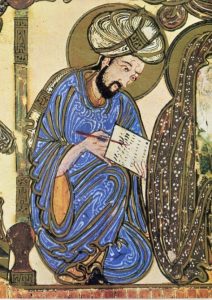

Wahdat al-Wujud — the unity of being
Associated especially with the later interpretation of Ibn Arabi’s metaphysics
This tradition explores the dependence of all existence upon the Real (al-Haqq), the relationship between divine reality and its manifestations, and the limitations of perceiving created things as independent.
Some interpretations of Ibn Arabi’s thought appear strikingly close to Advaita’s insistence that multiplicity does not possess independent existence apart from ultimate reality.
Both invite us to question the assumption that the many things we experience are entirely self-sufficient realities.
Yet the comparison needs care. Wahdat al-Wujud is a label whose interpretation and attribution have been debated. It should not be treated as a universally accepted Islamic doctrine, nor should Ibn Arabi’s thought simply be equated with Shankara’s Advaita.
For a Sufi, the language of divine unity can express the realisation that all things depend upon God and that nothing possesses independent existence. Whether this amounts to the identity of the human self with God is precisely where interpretations diverge.
In particular, the language of unity in Sufism does not automatically mean that God and the universe are literally the same thing.
This makes certain strands of Sufi metaphysics a particularly productive area for comparative study, although the precise similarities depend on which Sufi thinker and which Advaita interpretation we examine.
Stanford Encyclopedia of Philosophy+1
- Are these similarities merely superficial, or do they point to a deeper philosophical convergence?
I would distinguish three levels of similarity.
Level 1: Strong conceptual convergence
Both traditions affirm ultimate unity, divine transcendence or incomparability, and the inadequacy of ordinary material representations of the ultimate.
Level 2: Partial metaphysical convergence
Both can describe the world as dependent upon a higher reality. However, Advaita’s non-dual account of that dependence differs from Islam’s Creator–creation distinction.
Level 3: Fundamental doctrinal divergence
Advaita identifies Atman with Brahman at the ultimate level. Mainstream Islam maintains the distinction between Allah and every created being. Their respective understandings of revelation, salvation and the spiritual goal also differ.
It is also important not to infer direct historical borrowing merely from philosophical similarities. The resemblance can be studied as a convergence of ideas without assuming that one tradition necessarily derived its central doctrine from the other.
- A final philosophical observation
Perhaps the deepest common question is this:
If the ultimate reality is infinite, incomparable and the ground of everything that exists, how can the finite human mind adequately conceive of it?
Advaita Vedanta responds by directing the seeker beyond identification with the limited ego toward the realisation of non-dual Brahman.
Islam responds through tawhid, worship, knowledge of God’s names and attributes, and recognition that Allah transcends creation while remaining its sustainer.
Both challenge the tendency to reduce the divine to a finite image or an ordinary object of thought. But they do not give the same answer to what the ultimate relationship between God, the world and the self actually is.
The comparison becomes less exact at the level of metaphysics, especially when we ask whether the human self is ultimately identical with the divine or remains eternally distinct from its Creator.


