


Jodhpur Travel Diary
From the spiritual tranquillity of Ashapura Mata Temple in Nadol to the magnificent Mehrangarh Fort, the heritage lanes of the old city, the architectural elegance of Jaswant Thada and the royal grandeur of Umaid Bhawan Palace, this journey through Marwar offered an unforgettable encounter with Rajasthan’s history, culture, architecture and hospitality.
Introduction: A Journey into the Heart of Marwar
Rajasthan is a land where history is not confined to monuments and museums; it continues to breathe through its temples, traditions, food, architecture and everyday life. My journey from Kumbhalgarh to Jodhpur turned out to be much more than a road trip. It was an opportunity to experience the cultural diversity of Marwar, understand its historical legacy and interact with people who continue to preserve its traditional way of life.
Jodhpur, popularly known as the Blue City, has an extraordinary character. Its magnificent forts, intricately designed havelis, bustling traditional markets, ancient water structures and distinctive culinary traditions create an immersive experience for visitors.
Our journey included a fascinating combination of spiritual exploration, heritage accommodation, local cuisine, folk music and royal architecture.
- Ashapura Mata Temple, Nadol: Discovering the Spiritual Traditions of Rajasthan

We started from Kumbhalgarh for Jodhpur at approximately 10 PM. Covering nearly 200 kilometres by taxi took around five hours, although we made an interesting stop along the way at Ashapura Mata Temple in Nadol, approximately 60 kilometres from Kumbhalgarh.
The temple was particularly interesting from a cultural and spiritual perspective. What initially appeared to be a conventional religious shrine had developed into an extensive pilgrimage destination, attracting devotees from distant places.
I was curious to understand its historical significance. Conversations with local people revealed that Ashapura Mata is worshipped as a Kuldevi (ancestral tutelary deity) by several communities and particularly by certain Chauhan Rajput lineages.
The concept of a Kuldevi occupies an important position in Hindu family traditions. Families traditionally maintain a special relationship with a particular deity, who is believed to protect and guide their lineage. Worship becomes particularly significant during auspicious occasions such as childbirth, marriage and other important family ceremonies.
This tradition illustrates how Indian spirituality extends beyond individual worship to encompass family identity, ancestry and community relationships.
Historical references require some distinction here. Government documentation of the Nadol shrine identifies it as Ashapura Garh Mata Mandir, also locally known as Garh Ki Mata. A Rajasthan Forest Department study of the nearby Ashapura Mata sacred grove also records a connection with the Chauhan tradition and Prithviraj Chauhan. These references make the shrine particularly interesting for visitors interested in the relationship between regional history and religious traditions.
The temple visit provided an appropriate beginning to our journey through Marwar.
- Arrival in Jodhpur: A Heritage Homestay in the Old City
Our next destination was Jodhpur. After completing the journey, we reached the city at approximately 3:30 PM. We had deliberately selected a heritage homestay close to Mehrangarh Fort, hoping to experience the traditional lifestyle of the old city rather than staying in a conventional hotel.
However, reaching the exact property by taxi proved difficult. The surrounding neighbourhood was extremely crowded, with narrow lanes that were unsuitable for regular vehicle movement. We eventually walked approximately 100 metres with our luggage to reach the accommodation.
After settling into our room and taking an hour’s rest, we stepped outside to explore the neighbourhood.
My first impression of Jodhpur was exceptionally positive. The city was full of exuberance, its streets were animated with everyday commercial activity, and local people were generally welcoming and friendly. The narrow lanes, traditional houses, colourful shops and glimpses of Mehrangarh Fort created a fascinating atmosphere.
Staying in a heritage homestay also offered an opportunity to experience Jodhpur beyond its conventional tourist attractions.
- Exploring Jodhpur’s Traditional Markets and Culinary Heritage
Early two hours exploring the local markets and sampling traditional Rajasthani delicacies. Rajasthan’s culinary heritage is closely connected with its geography and climatic conditions. In a predominantly arid region where fresh green vegetables and water were historically scarce, local communities developed ingenious ways of preparing food using gram flour, lentils, dried vegetables, spices and locally available ingredients.
Among the dishes we tasted were:
- Dal Baati Churma: Perhaps the most recognisable Rajasthani combination, consisting of baked wheat balls, lentil preparation and sweetened, crumbled wheat.
- Gatte Ki Sabzi: A delicious gram-flour preparation cooked in a yoghurt-based gravy with traditional spices.
- Haldi Ki Sabzi: An unusual regional delicacy prepared using fresh turmeric, traditionally cooked with yoghurt and spices.
- Traditional Rajasthani sweets: We also explored some local sweet varieties such as Daal Badam Halwa that offered a wonderful conclusion to our culinary experience.
What impressed me was the distinctive character of Rajasthani food. Its flavours were rich, its preparations were deeply rooted in local traditions, and its ingredients reflected the ingenuity of people adapting to the desert environment.
Food exploration became an essential part of understanding the cultural identity of Jodhpur.
- Ghanta Ghar and Sardar Market: An Evening of Folk Music and Cultural Vibrancy

The Clock Tower
At approximately 7 PM, we reached Ghanta Ghar, popularly known as the Clock Tower of Jodhpur.
The Clock Tower is one of the most recognisable landmarks of the old city. It was constructed during the reign of Maharaja Sardar Singh, between 1880 and 1911. The adjoining commercial area developed into Sardar Market, named after the Maharaja, and continues to be an important centre of local trade.
The atmosphere was completely different from the experience of visiting a conventional historical monument.
The surrounding market was bustling with activity. Traditional shops, local traders, tourists and residents collectively created an energetic environment. Yet, amid this activity, something particularly memorable caught my attention.
A local folk musician was playing the Sarangi, a traditional bowed string instrument associated with North Indian classical and folk music.
The peaceful instrumental music created an unexpected sense of serenity in the middle of the crowded marketplace. For approximately 30 minutes, we remained immersed in the performance.
It was one of those experiences that cannot easily be captured through photographs. The combination of traditional music, historical surroundings and everyday urban life offered an authentic glimpse into Rajasthan’s cultural richness.
- Toorji Ka Jhalra: An Architectural Reminder of Traditional Water Management
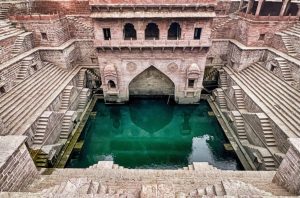

Toorji Ka Jhalra
Some local residents recommended visiting Stepwell Square, located approximately 150 metres from the Clock Tower. We followed their suggestion and discovered Toorji Ka Jhalra, one of Jodhpur’s most fascinating traditional water structures.
The stepwell is surrounded by heritage buildings and narrow streets, creating an architectural setting that beautifully reflects the character of old Jodhpur.
The local shopkeeper explained that the structure had originally served as a water reservoir, supporting the city’s population in an environment where water conservation was essential.
Historical information makes the story even more interesting. Toorji Ka Jhalra is generally associated with Queen Tunwar Ji, the consort of Maharaja Abhay Singh, who commissioned it in 1748. It was designed as a functional water-harvesting structure, but also served as an important social space where residents could gather.
The symmetrical flights of steps descending towards the water reservoir demonstrate the sophistication of traditional Indian water-management systems.
The stepwell also reflects an important aspect of Rajasthan’s architectural heritage: historical infrastructure was not merely functional but frequently incorporated aesthetic and social dimensions.
As evening approached, the illumination of Mehrangarh Fort created an enchanting backdrop. The surrounding heritage buildings, illuminated fortifications, tourists and local residents collectively contributed to a festive atmosphere.
The experience was particularly rewarding because it demonstrated how historical architecture continues to remain relevant to contemporary urban life.

Step Well Square
- An Evening with Our Heritage Homestay Host: Discovering the Social History of Jodhpur
Returning to our heritage homestay, we found the owner waiting to greet us.
Our interaction with him and his family members proved to be one of the most memorable aspects of the stay. Unlike a conventional hotel experience, the homestay offered an opportunity to understand the city through the perspective of its residents.
During our conversation, the owner shared an interesting observation about the traditional buildings surrounding Mehrangarh Fort.
According to him, many of these heritage properties had historically accommodated people associated with the royal administration, including officers, military personnel and household servants who worked for the ruler.
This observation is consistent with the historical development of Jodhpur’s old settlement. The fort was not an isolated royal establishment; a substantial urban settlement developed around it, accommodating different sections of the royal administration and the wider population.
The old city therefore offers an opportunity to understand the social organisation of the former princely state of Marwar.
Our host also recommended Vijay Restaurant for experiencing authentic Rajasthani cuisine.
We decided to follow his recommendation and enjoyed dinner there. The experience reinforced our impression that local recommendations often lead travellers to memorable culinary discoveries.
- Mehrangarh Fort: Walking Through Five Centuries of Royal History

Meharangarh Forte
The following morning, we started our sightseeing at 9 AM sharp. It took approximately 10 minutes to reach the parking area of Mehrangarh Fort. Mehrangarh Fort is undoubtedly one of the most impressive historical monuments in Rajasthan. Perched on a rocky hill overlooking the city, the fort commands spectacular views of Jodhpur’s blue-painted houses and surrounding landscape.
Its foundation was laid in 1459 by Rao Jodha, the Rathore ruler who established Jodhpur as the capital of Marwar. The name Mehrangarh is commonly interpreted as the Fort of the Sun, reflecting the Rathore dynasty’s traditional association with the Sun God.
The fort underwent several phases of expansion and architectural development under successive rulers. Its present appearance represents more than five centuries of construction, renovation and royal patronage.
The architectural experience was particularly fascinating.
Unlike Kumbhalgarh Fort, which had impressed me with its enormous defensive walls and extensive fortifications, Mehrangarh offered a different experience through its steep pathways, imposing gates, palaces and elaborate interiors.
The fort’s museums preserve a remarkable collection of royal possessions, including weapons, paintings, textiles, furniture, palanquins and objects associated with the lifestyle of the rulers of Marwar.
The palaces within the complex are equally impressive:
- Moti Mahal: Known for its magnificent royal audience hall and decorative interiors.
- Phool Mahal: A richly decorated palace associated with royal entertainment and ceremonial occasions.
- Sheesh Mahal: An impressive example of decorative craftsmanship incorporating mirror work.
Approximately three hours proved sufficient for us to explore the principal architectural attractions and museum collections.
Walking through these historical spaces transported me into the fifteenth and sixteenth centuries. The magnificent architecture, elaborate decorations and royal artefacts helped me imagine the political, cultural and social life of the period.
Mehrangarh is not simply a fort; it is a repository of the historical memory of Marwar.
- Jaswant Thada: A Peaceful Encounter with Nature and Royal Architecture
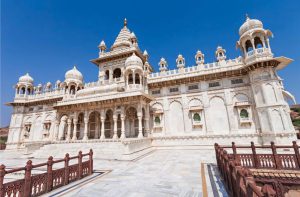

Yaswant Thada
Our next destination was Jaswant Thada, located close to Mehrangarh Fort.
After spending several hours exploring the imposing fortifications and royal palaces, Jaswant Thada offered a welcome change of atmosphere.
The monument is often described as the Taj Mahal of Marwar because of its elegant white marble architecture.
It was commissioned in 1899 by Maharaja Sardar Singh in memory of his father, Maharaja Jaswant Singh II, and completed in 1906.
Jaswant Thada is essentially a royal cenotaph complex, commemorating the rulers of Jodhpur. Its beautifully carved marble screens allow sunlight to filter through the structure, creating a distinctive visual experience.
What I particularly appreciated was the peaceful environment surrounding the monument.
The gardens, waterbody, trees and architectural surroundings made it an ideal destination for a leisurely walk. The atmosphere was considerably more tranquil than the crowded pathways of Mehrangarh Fort.
However, despite visiting during the first week of November, I could still feel the intensity of the Rajasthan sun.
We spent approximately an hour exploring the complex and enjoying its natural surroundings.
For anyone interested in photography, architectural details and peaceful heritage locations, Jaswant Thada deserves a place in the Jodhpur itinerary.

Yaswant Thada: a perfect walk into the nature
- Baari: Experiencing Rajasthani Hospitality with a Contemporary Touch
By approximately 1:30 PM, we had completed our visit to Jaswant Thada and decided to head for lunch at Baari, a heritage-style restaurant.
The restaurant offered an interesting combination of traditional Rajasthani culture and contemporary hospitality.
The quality of food was excellent, and the ambience complemented the overall dining experience.
What particularly attracted my attention was the live Rajasthani folk music performed by a local artist.
The traditional musical compositions added a cultural dimension to the dining experience. It was not merely about enjoying a meal; it was about experiencing the region’s hospitality, music and culinary traditions in a carefully maintained heritage setting.
After spending considerable time exploring forts, museums and monuments, this leisurely lunch proved to be an appropriate break before our next destination.
- Umaid Bhawan Palace: Discovering the Grandeur of Modern Royal Rajasthan
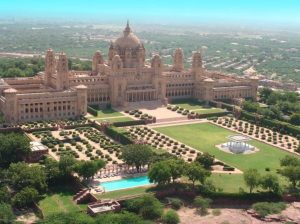

The Ummed Palace
By approximately 3 PM, we reached our next destination, Umaid Bhawan Palace.
Unlike Mehrangarh Fort, which reflects the medieval military and architectural traditions of Marwar, Umaid Bhawan represents a comparatively modern chapter in the history of Jodhpur’s royal family.
Construction began in 1928 under Maharaja Umaid Singh and was completed in 1943.
Interestingly, the palace was commissioned during a period of severe economic hardship and drought. Its construction provided employment to thousands of local workers and became an important relief initiative.
The palace is an architectural masterpiece combining elements of Indian and European design. Built using local sandstone, it is also popularly associated with Chittar Hill, on which it stands.
Today, the palace has three distinct functions:
- It continues to serve as a royal residence.
- A section operates as a luxury heritage hotel.
- Another section functions as a museum accessible to visitors.
After taking a short rest and enjoying tea, I began exploring the museum.
The collection of historical watches, vintage automobiles, royal memorabilia and other heritage objects created considerable excitement.
The museum offered a fascinating perspective on the changing lifestyle of the Jodhpur royal family, particularly the transition from traditional princely life towards modernity.
The collection of vintage cars was particularly interesting, demonstrating the royal family’s association with technological innovation and luxury during the twentieth century.
Umaid Bhawan Palace provided a fitting conclusion to our exploration of Jodhpur’s architectural and cultural heritage.
- Overall Experience: Why Jodhpur Deserves a Place on Every Rajasthan Itinerary
My experience of Jodhpur was considerably more diverse than a conventional sightseeing trip.
What made the journey special was the opportunity to experience different dimensions of the city’s identity.
Mehrangarh Fort introduced us to the military, political and architectural history of Marwar. Jaswant Thada offered a peaceful encounter with royal memorial architecture. Umaid Bhawan demonstrated the evolution of royal lifestyles during the twentieth century.
Meanwhile, Ghanta Ghar, Sardar Market and Toorji Ka Jhalra provided an opportunity to experience the everyday cultural life of the old city.
The heritage homestay added another dimension to the journey by enabling us to interact with local residents and understand the historical character of traditional neighbourhoods.
And, of course, the food and folk music made the experience even more memorable.
I would particularly recommend Jodhpur to travellers who appreciate historical architecture, regional traditions, cultural interactions and authentic culinary experiences.
It is a destination where the past and present coexist remarkably well.
Best Time to Visit Jodhpur
Recommended season: October to March
Jodhpur experiences a hot and arid climate because of its geographical location in the Thar Desert region. Choosing the right season can significantly improve the sightseeing experience.
| Season | Months | Travel experience |
| Winter | October–March | Best for sightseeing and outdoor activities |
| Summer | April–June | Extremely hot; outdoor exploration becomes difficult |
| Monsoon | July–September | Occasional rainfall, relatively pleasant evenings |
October to March is generally the best period to visit Jodhpur. Days are comparatively comfortable, making it easier to explore forts, palaces, markets and heritage neighbourhoods.
The first week of November, when I visited, was generally suitable for sightseeing. However, the afternoon sun could still feel intense, particularly at open monuments.
December and January are particularly attractive for outdoor sightseeing, although evenings and early mornings can become chilly.
Important Precautions and Travel Tips for Tourists
A visit to Jodhpur can be extremely rewarding, but a few practical precautions can make the experience more comfortable.
- Prepare for narrow streets in the old city
If you are booking a heritage homestay near Mehrangarh Fort or Ghanta Ghar, confirm vehicle accessibility in advance. Some properties are located inside narrow lanes where taxis cannot reach the entrance.
- Wear comfortable walking shoes
Mehrangarh Fort involves considerable walking, steep pathways and uneven surfaces. Comfortable footwear is essential, particularly for senior citizens and children.
- Protect yourself from the sun
Even during November, afternoon sunshine can be intense. Carry sunscreen, sunglasses, a hat and sufficient drinking water.
- Start sightseeing early
Try to visit Mehrangarh Fort during the morning hours. It allows you to explore the complex more comfortably before the afternoon heat and larger tourist crowds.
- Respect religious traditions
When visiting temples, follow local customs regarding footwear, photography and appropriate clothing. Always seek permission before photographing worshippers or religious ceremonies.
- Exercise caution around stepwells
Toorji Ka Jhalra has steep steps and can have slippery surfaces. Avoid approaching the water’s edge or climbing restricted sections, particularly when visiting with children.
- Check monument timings and ticket arrangements
Opening hours, entry charges, museum access and special activities may change. Check the official websites before travelling.
- Plan your heritage accommodation carefully
Heritage properties offer wonderful cultural experiences, but facilities, parking arrangements and accessibility can vary. Confirm these details before making a reservation.
- Be selective while purchasing souvenirs
Sardar Market offers spices, handicrafts, textiles, jewellery and traditional footwear. Compare prices and check product quality before purchasing.
- Plan your food choices carefully
Rajasthani cuisine can be rich in spices and ghee. Choose hygienic restaurants, drink sealed or properly filtered water and avoid uncovered food from questionable sources.
Author: D.Chandra


