

When Stories Become Dangerous: India’s Censorship Battles and the Sonia Gandhi–Penguin Book Controversy

Introduction
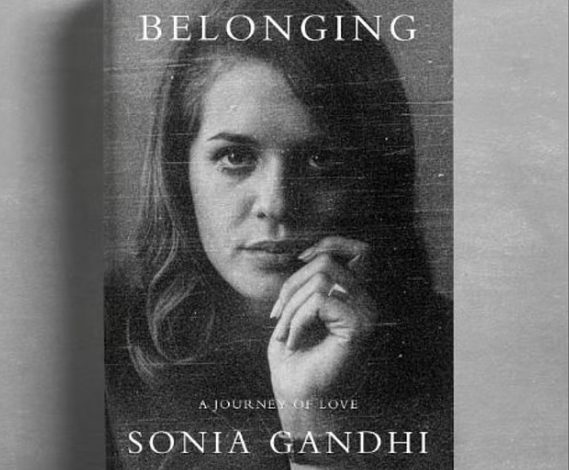
After General MM Naravane’s unpublished book Four Stars of Destiny, Penguin Random House India got tangled with the publication of the book, Belonging: A Journey of Love by Sonia Gandhi, one of the most influential voices in Indian politics. After decline in editorial changes by Sonia Gandhi, Penguin India has decided not to publish this book, although its parent organisation, Alfred A. Knopf is scheduled to release this book on November 10, 2026 worldwide. Therefore, the ground of not publishing the book appears murkier, as it fails to precisely reflect the circumstances (Vincet, 2026). But India’s Censorship Battles have continued to capture imagination of people.
Literature has often remained at the helm of ban and political resistance because words ultimately outlast swords. Empires burn books as they understand something fundamental has to be eliminated. Nazi Germany organised book burning festivals in universities, for instance (Holocaust Encyclopaedia, 2024)
India has a long and complicated history of banning books or suppressing literature through various means. The country has its own long and complicated history of struggle with literature: Books have been banned. Plays have been disrupted. Speeches have been cancelled. Publishers have been pressured. Sometimes there have been alternations in manuscripts as well, and there were instances when film censor bords have been instructed not to pass the film and just delay the clearance indefinitely.
When films that expose caste and gender violence, such as Santosh, are banned, but violent and hatred filled nationalist narratives, such as Chhaava, are celebrated, what can one say about artistic freedom in the country? (News Click, 2025).
The recent undeclared and unexplained ban on Sonia Gandhi’s book raises a few pertinent questions: What happens to a society when writers begin to anticipate the ban before they write? Why does the state fear a story?
The Indian tradition of the forbidden page
Salman Rushdie’s, The Satanic Verses, can be taken as the most famous book ban in modern history of India. The novel was inspired by the life of prophet Muhammad. But widespread protests erupted in India and several other countries including Iran over its alleged offensiveness to Islam. Iran’s supreme leader, Ayatollah Khomeini, placed a bounty on Rushdie’s head as he considered the book promoted blasphemy. The incumbent Rajiv Gandhi government banned the book in 1988 after riots erupted over its contents.
The case of ‘The Satanic Verses’ underlines that a work of literature written in one part of the world could instantly become a question of public order in other parts of the world, separated by a thousand kilometres of distance. The significance of this episode goes beyond Rushdie’s novel, the Satanic Verses as the state can conveniently invoke the question of public order to declare a piece of literature as dangerous.
Rushdie write on X, “‘Language is courage: the ability to conceive a thought, to speak it, and by doing so to make it true.’ At long last”. The state often becomes fearful from this courage (MacRae, 2024).
The similar episode erupted in 2004 over James Laine’s ‘Shivaji: Hindu King in Islamic India’. The book became the centre of controversy in Maharashtra, and consequently it was banned by the incumbent Maharashtra government after a violent protest by “Sambhaji Brigade” to appease Maratha lobby (Katakam, 2004). The Supreme Court, however, lifted the ban in 2010. This ban reveals that even a scholarly interpretation of history becomes controversial and controversy translates into protest and protest into prohibition. Eventually, the state is asked to determine which version of the past citizen should be allowed to read.
When the author becomes the crime
The Bengali Writer Taslima Nasrin’s story is quite disturbing and painful, as it compellingly describes the price the author pays for speaking against orthodoxy. She found herself at the helm of controversy when her 1993 novel, Lajja, triggered nationwide strong opposition from religious groups. The novel narrated the story of a Hindu family facing prosecution in the country. The novel draws intense and violent opposition from religious groups. Consequently, Nasrin had to leave the country and she eventually took refuge in Kolkata, a quiet place with a familiar language.
But in 2007, she started receiving life threats from orthodox Islamic religious groups because of her strong criticism of religious orthodoxy. Her autobiography Dwikhandito further fuelled the intensity of protests from religious groups and they demanded Nasrin to leave West Bengal. Again, she was moved from the city to New Delhi. Eventually, she left India in 2008 (Times of India, 2026).
Irony is that a writer can be easily told her words are dangerous as they may potentially provoke violence, but concomitantly perpetrators of violence are made de-facto editors, as ultimately, they determine which words should be spoken.
The case of Penguin India
In 2014, ‘The Hindus: An Alternative History’ by Wendy Donginer got involved with a complex web of legal controversy as the book had offered a plural but provocative interpretation of Hindu mythology and history. Following a legal dispute filed by Hindu campaign group Shiksha Bachao Andolan, Penguin India made an out of court settlement with the author and decided to recall and destroy copies of the book.
The decision to withdraw the book drew widespread criticism that banning a book in such a manner could prove a serious blow to free speech. Yet Penguin India failed to provide reasonable justification behind its decision. Through an official statement, however, the publisher clarified that it had an obligation to respect the law of the land. Interestingly, the Indian Penal Code (IPC) criminalises offences that hurt religious feelings deliberately, although the definition of hurting religious sentiments stands completely vague. The publisher feared that criminal proceedings could be initiated against both publisher and the author for non-compliance with withdrawal of the book. Yet Wendy Doniger did not blame the publisher but she expressed anger and concern for state of freedom of speech in India (BBC, 2014).
The cinema has faced the same battle
Films have remained often in the helm of bans, cuts, censorship and legal disputes. Shyam Benegal’s Manthan, Shekhar Kapur’s Bandit Queen, Deepa Mehta’s Fire and Water, Anurag Kashyap’s Black Friday and several other films have faced protests, bans and cuts. During the Emergency, Gulzar’s Aandhi was drawn into a controversy due to its uncanny similarity between the film’s lead character and then Prime Minister Indira Gandhi, consequently the film was withdrawn from screens. Several other films have faced bans and censorship when they tried to pose uncomfortable questions from the government or people in power.
The Penguin question returns in 2026
The old question has resurfaced in 2026: What happens to a society when writers begin to anticipate the ban before they write, and Why does the state fear a story? The decision of Penguin Random House not to publish Sonia Gandhi’s forthcoming memoir, Belonging: A Journey of Love lacks reasonable justification. Some political commentators and available report hint that the book reflects on politically sensitive subjects, including Narendra Modi, China and RSS.
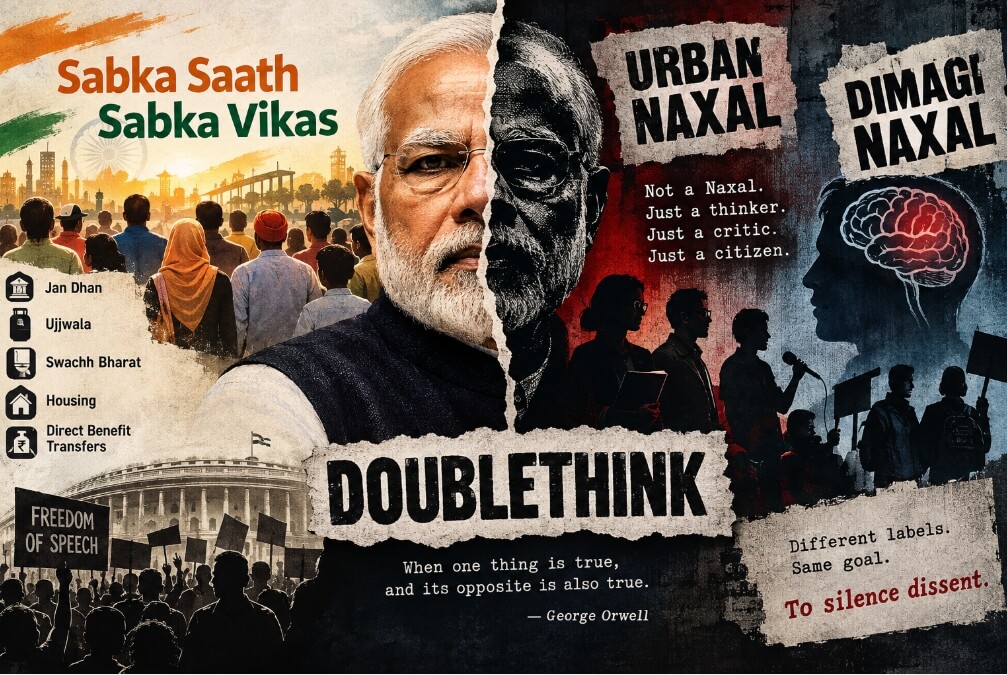
The incumbent government and its political machinery relentlessly work on spreading controlled narratives – the heroic personality of Narendra Modi, cultural renaissance and curated growth figures and narratives. A first-person narrative by a person of stature like Sonia Gandhi, who has famously declined Prime Ministership post in 2004, can puncture controlled and curated narratives.
Stories not merely describe power dynamics but they also give voice, context and emotional force. Nevertheless, power does not fear all stories equally. Sonia Gandhi has decided to publish her memoir after decades of deliberate silence and privacy, and therefore her authentic account can pose some complex questions to people in power.
Chandra, D. 2026
References
BBC, 2014. Wendy Doniger Hindus book: Penguin India defends recall: https://www.bbc.com/news/world-asia-india-26184819
Katakam, A. 2024. Ban, after protest: https://frontline.thehindu.com/other/article30221008.ece
Vincet, P.I. 2026. ‘Self-censorship’ lens on ‘Belonging’: Penguin India drops Sonia Gandhi’s memoir, The Telegraph Online: https://www.telegraphindia.com/india/self-censorship-lens-on-belonging-penguin-india-drops-sonia-gandhis-memoir-prnt/cid/2177253
Yadav, N. Political row erupts in India over ex-army chief’s unpublished memoir, BBC: https://www.bbc.com/news/articles/c0er0qrxlzzo
Holocaust Encyclopaedia, 2024. Nazi Book Burnings: https://encyclopedia.ushmm.org/content/en/article/book-burning
MacRae, P. 2024. Rushdie’s Satanic Verses returns to Indian bookshops after 36 years, The Guardian; https://www.theguardian.com/books/2024/dec/26/salman-rushdie-satanic-verses-india-bookshops
News Click, 2025. India’s Censorship Hypocrisy, Ban on Santosh and Promotion of Chhaava; https://www.newsclick.in/indias-censorship-hypocrisy-ban-santosh-promotion-chhaava
Times of India, 2026. Taslima Nasreen returns to Kolkata after 19 years: Why was forced to leave: https://timesofindia.indiatimes.com/etimes/trending/taslima-nasreen-returns-to-kolkata-after-19-years-why-was-she-forced-to-leave/articleshow/132762632.cms
The New Indian Express, 2026. Trouble with books that know too much, or too little


1 Comment
[…] Source: When Stories Become Dangerous: India’s Censorship Battles and the Sonia Gandhi–Penguin Book Cont… […]