

Madness as a Mirror of Partition: Reading Saadat Hasan Manto’s Political Imagination
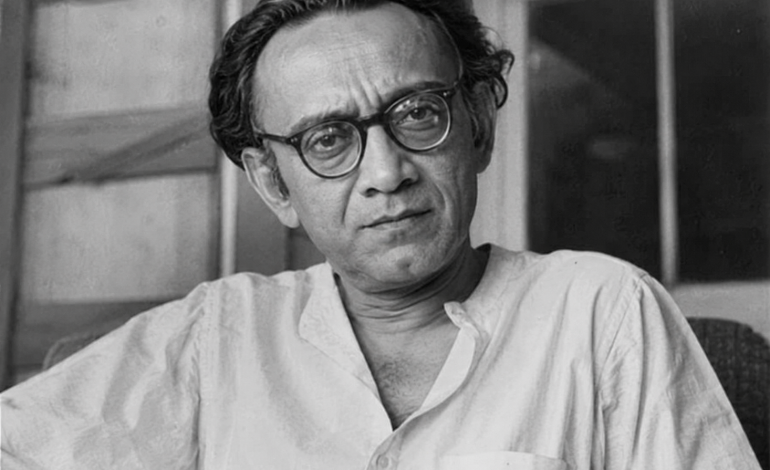

When History Loses Its Sanity
The Partition of the Indian subcontinent in 1947 remains one of the most traumatic events in South Asian history. Millions were displaced, communities were torn apart, and violence became an everyday reality. Amid this chaos, writer Saadat Hasan Manto produced some of the most powerful literary reflections on Partition. Rather than focusing solely on political leaders or historical events, Manto turned his attention to ordinary people whose lives were shattered by the violence around them.
One of the most striking features of his work is the recurring theme of madness. In Manto’s stories, madness is not merely a medical condition; it becomes a lens through which the absurdity, brutality, and contradictions of Partition are exposed.
Madness Beyond the Asylum
Manto’s understanding of madness extends far beyond psychiatric definitions. His characters often appear mentally unstable because they are attempting to survive a world that has itself become irrational. In stories such as Khol Do, trauma fractures the boundaries between normality and insanity, illustrating how extreme violence reshapes human consciousness.
For Manto, madness exists on a spectrum. It cannot be separated from the social and political conditions that produce it. The experiences of displacement, loss, and communal hatred blur the distinction between sanity and insanity, forcing readers to question who is truly mad—the individual or the society that created such conditions.
A Mother’s Endless Search in Khuda Ki Qasm
In Khuda Ki Qasm (I Swear by God), Manto portrays a Muslim mother searching desperately for her abducted daughter during the riots. Despite being told that her daughter is likely dead, she refuses to accept the possibility. Wandering from city to city, disheveled and incoherent, she clings to hope as the only force keeping her alive.
The narrator recognizes that her seemingly irrational search is not merely madness but a survival mechanism. Removing her illusion would mean destroying the last source of meaning in her life. Through this character, Manto challenges simplistic definitions of insanity and reveals how grief can transform reality itself.
Toba Tek Singh: The Border Between Reason and Absurdity
Among Manto’s most celebrated stories, Toba Tek Singh offers perhaps the clearest exploration of madness as political critique. Set in a Lahore mental asylum after Partition, the story revolves around the decision to exchange asylum inmates between India and Pakistan according to their religious identities.
The absurdity of the situation becomes immediately apparent. The inmates struggle to understand why they must be transferred based on borders they neither created nor comprehend. Questions about nationality, belonging, and identity become impossible to answer.
At the center of the story stands Bishan Singh, a Sikh inmate whose attachment to his hometown, Toba Tek Singh, transcends political categories. His confusion reflects the experience of countless people uprooted by Partition. When maps are redrawn and identities imposed from above, personal histories no longer fit neatly within national boundaries.
Partition and Collective Schizophrenia
Manto suggests that madness is not confined to asylum walls. Instead, it spreads throughout society. Political leaders claim certainty while ordinary people struggle to understand rapidly changing realities. Communities that once lived together become enemies overnight.
This phenomenon can be described as a form of collective schizophrenia—a social condition in which reality itself becomes fragmented. In such circumstances, madness becomes less an individual pathology and more a symptom of a deeply fractured world.
The famous scene in which an asylum inmate enthusiastically shouts “Pakistan Zindabad” while bathing and subsequently collapses captures this absurdity perfectly. Political slogans, detached from lived experience, become empty performances that reveal the instability of the world around them.
Philosophical Dimensions of Madness
Manto’s work also invites philosophical reflection. His stories question the assumptions that underpin concepts such as nationhood, identity, and rationality. The inmates of Toba Tek Singh often appear confused, yet their confusion exposes contradictions that supposedly rational political systems prefer to ignore.
By placing madmen at the center of his narratives, Manto reverses conventional hierarchies. Those considered irrational become the ones capable of revealing uncomfortable truths about society. Their inability to accept simplistic political narratives highlights the limitations of the ideological certainties that produced Partition.
The Absence of Closure
Unlike many writers whose stories culminate in clear resolutions, Manto rarely offers comfort or closure. His narratives often end with lingering uncertainty. Readers are left confronting questions rather than answers.
This openness reflects the reality of Partition itself. The violence was so devastating that no philosophical explanation or political justification could fully account for its consequences. In Manto’s world, truth remains fragmented, and certainty remains elusive.
Why Manto’s Madness Still Matters
Manto’s portrayal of madness continues to resonate because it speaks to universal questions about identity, trauma, and power. His stories reveal how political decisions affect ordinary lives and how violence can destabilize the very foundations of human understanding.
Rather than treating madness as a condition isolated within individuals, Manto presents it as a social and political phenomenon. Through characters like Bishan Singh and the grieving mother of Khuda Ki Qasm, he reminds readers that when society loses its moral compass, madness may become the most honest response to an irrational world.
References
Alter, Stephen, and ﺃﻟﺘﺮﺳﺘﻴﭭﻦ. “Madness and Partition: The Short Stories of Saadat Hasan Manto / ﺍﻟﺠﻨﻮﻥ ﻭﺍﻟﺘﻘﺴﻴﻢ : ﻗﺼﺺ ﺳﻌﺎﺩﺕ ﺣﺴﻦ ﻣﻨﺘﻮ ﺍﻟﻘﺼﻴﺮﺓ.” Alif: Journal of Comparative Poetics, no. 14, 1994, pp. 91–100. JSTOR, https://doi.org/10.2307/521767.
Flemming, Leslie A. Another Lonely Voice : the Urdu Short Stories of Saadat Hasan Manto. Berkeley :Center for South and Southeast Asia Studies, University of California, 1979.


1 Comment
[…] Source: Madness as a Mirror of Partition: Reading Saadat Hasan Manto’s Political Imagination […]