
The Maternal Rejection: Why Literature Is Finally Telling the Truth About Motherhood
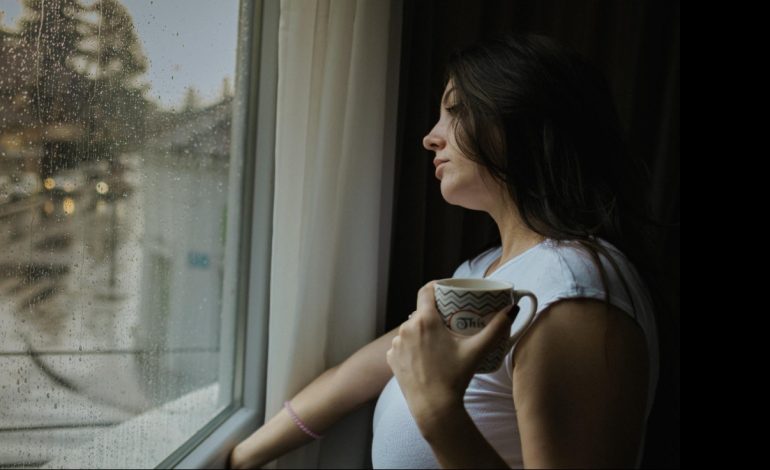

There are few experiences as universally celebrated—and as persistently misunderstood—as motherhood. We have endless paintings of the Madonna cradling the Christ child, advertisements where mothers glow with effortless devotion, and stories where childbirth marks the triumphant fulfillment of a woman’s destiny. Yet beneath this carefully curated mythology lies another archive: one filled with fear, estrangement, exhaustion, and the unsettling realization that bringing life into the world can also feel like the disappearance of one’s own. Thus, Truth About Motherhood is far more unsettling
What if motherhood is not simply an act of creation, but also an experience of rupture? This question echoes across centuries, from eighteenth-century poetry to contemporary memoirs, revealing a literary history that has repeatedly silenced the maternal body even while glorifying motherhood itself.
The Body That Everyone Claims, Yet No One Hears
Anna Laetitia Barbauld’s To a Little Invisible Being Who Is Expected Soon to Become Visible begins with wonder but quickly slips into something far more unsettling.
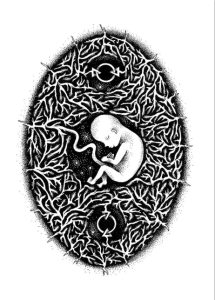
Rather than presenting the womb as a sacred sanctuary, Barbauld imagines it as a paradoxical space—a prison whose doors must eventually be broken open, a “living tomb” where another consciousness quietly develops. Pregnancy becomes an uncanny condition: a body inhabited by another life, a self split between presence and absence.
The poem refuses the comforting language of maternal bliss. Instead, it confronts the profound vulnerability of gestation—the strange coexistence of intimacy and alienation, creation and confinement.
Nearly two and a half centuries later, Barbauld’s questions remain disturbingly contemporary. How does one speak about a body that is celebrated primarily for what it contains rather than for what it experiences?
The Great Silence Around Motherhood
It is remarkable that philosophy has spent millennia asking what it means to exist while paying remarkably little attention to the experience through which every human existence begins.
When philosophers discuss the body, they often imagine an autonomous individual. When they discuss ethics, they rarely begin with pregnancy. When they explore identity, motherhood appears merely as metaphor or footnote.
The maternal body has been governed, regulated, romanticized, legislated, and appropriated—but rarely understood.
This absence is not accidental.
To seriously engage with maternity would require confronting uncomfortable questions about dependence, vulnerability, bodily transformation, and the instability of the self. Motherhood destabilizes the neat philosophical binaries between self and other, body and mind, autonomy and dependence. It reveals identity not as fixed, but as porous. Perhaps that is precisely why it has been easier to idealize mothers than to listen to them.
The Forbidden Emotion
Among the most enduring cultural taboos is the possibility that a mother might not immediately love her child.
Barbara Johnson once observed that “the idea that a mother can loathe, fear, and reject her baby has until recently been one of the most repressed of psychoanalytic insights.”
The sentence is startling precisely because it exposes what culture has worked so hard to conceal.
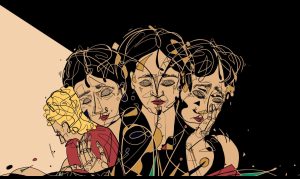
Maternal rejection is treated not merely as an emotional possibility but as moral blasphemy. Society readily accepts stories of difficult fathers, reluctant lovers, conflicted children, even antiheroes who reject family altogether. Mothers alone are expected to embody unconditional affection.
Anything less appears unnatural. Literature, however, has always known better. Beneath idealized narratives runs another tradition—one populated by women who confess exhaustion, ambivalence, resentment, and grief alongside love. These works do not diminish motherhood; they make it recognizably human.
Becoming Invisible
Alice Notley once described early motherhood with devastating precision:
“For two years, there’s no me here.”
Few lines capture maternal erasure more completely.
Motherhood is often described as giving life to another. Less frequently acknowledged is what must be relinquished in the process: uninterrupted time, bodily autonomy, solitude, professional identity, and sometimes even language itself.
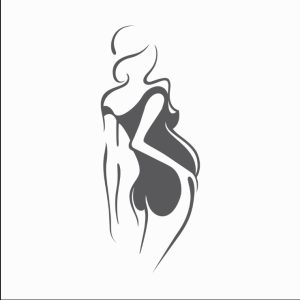
The mother’s body slowly disappears from public view.
Medical discourse monitors the fetus.
Family members celebrate the newborn.
Society protects the child.
The maternal body, meanwhile, recedes into the background, becoming infrastructure rather than subject.
She becomes the place through which another life arrives.
Time After Birth
Sarah Manguso’s Ongoingness captures another transformation that rarely enters cultural conversations: motherhood’s radical restructuring of time.
Before birth, time unfolds through ambition, memory, and anticipation.
After birth, time fragments.
Days repeat.
Sleep dissolves chronology.
Moments stretch infinitely while months disappear without warning.
The maternal experience is measured less by calendars than by feeding schedules, developmental milestones, and tiny bodily changes.
Motherhood becomes not merely an event in time but a different experience of temporality itself.
The mother’s body no longer simply occupies time.
It becomes time.
Writing Against the Myth
Kate Zambreno, Elisa Albert, Rachel Cusk, Maggie Nelson, Sarah Manguso, and many contemporary writers have begun dismantling inherited myths surrounding motherhood.
Their work does something revolutionary.
Instead of presenting motherhood as either sacred fulfillment or tragic sacrifice, they portray it as contradiction.
Love coexists with resentment.
Creation with destruction.
Fulfillment with loss.
Joy with unbearable fatigue.
These narratives reject perfection in favor of complexity.
In doing so, they reclaim the maternal body from centuries of symbolic appropriation.
Why These Stories Matter
To write honestly about motherhood is not to diminish it.
It is to rescue it from impossible ideals.
When literature acknowledges maternal vulnerability, ambivalence, or rejection, it is not attacking motherhood. It is expanding our ethical imagination. It reminds us that mothers are not metaphors for unconditional care but people whose bodies undergo extraordinary transformation and whose identities are continually negotiated.
Perhaps maternal rejection unsettles us because it forces us to abandon comforting fantasies.
It reminds us that motherhood is neither instinct nor destiny alone. It is an ongoing, often painful process of becoming—one shaped by bodies, histories, communities, and unequal social expectations.
If literature has taught us anything, it is that the maternal body has always carried more than children.
It has carried civilization’s anxieties about gender, identity, vulnerability, and the boundaries of the self.
The question, then, is no longer whether motherhood deserves philosophical or literary attention.
It is why it took us so long to begin listening.
As contemporary writers reopen this conversation, they invite us to see the maternal body not as an idealized symbol but as one of the most profound sites for thinking about what it means to be human. In that recognition lies the possibility of a richer literary canon—one that finally grants motherhood the complexity, contradiction, and intellectual seriousness it has always deserved.
Chandra, S. 2026
References
Barbauld, Anna Letitia. Anna Letitia Barbauld: Selected Poetry and Prose. Eds. William McCarthy and Elizabeth Kraft. Ontario: Broadview P, 2002.
Johnson, Barbara. “My Monster/My Self.” Diacritics, vol. 12, no. 2, 1982, pp. 2–10. JSTOR, https://doi.org/10.2307/464674. Accessed 20 Oct. 2024.