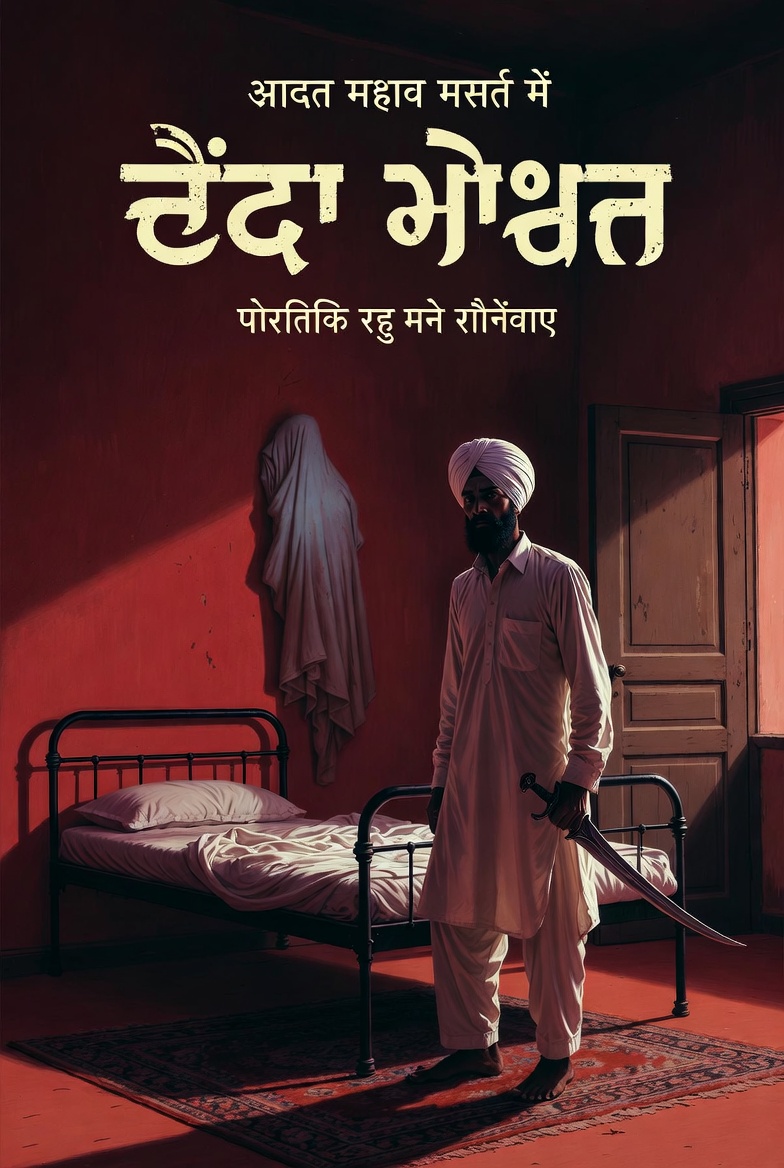

“Cold Meat” by Saadat Hasan Manto: When Partition Killed Humanity Before It Claimed Lives
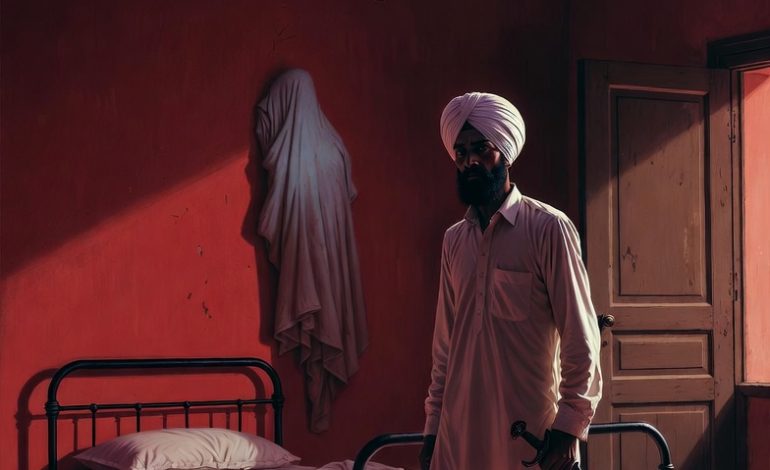

The uproar of mobs with their dangling daggers, rods, pistols and unseen, unknown objects which has the potential to possibly perpetrate violence could be clearly heard from far and wide, as they crafted ripples of fright and sock. Traumatized, almost psychically paralyzed, people made their own graves in their houses, cloaked and veiled their precious belongings, including their children, young daughters, sisters and wives in order to guard them against the brutal plunder
Few writers have the courage to expose the ugliest facets of human nature with the honesty and bluntness of Saadat Hasan Manto. Among his most unsettling works, “Cold Meat” (Thanda Gosht) stands not merely as a story of violence but as an unflinching indictment of communal hatred, moral collapse, toxic masculinity triggered by the partition of India.
Saadat Hasan Manto (1912–1955), one of the most influential and provocative writers of the 20th century, is renowned for embedding unflinching realism, psychological depth and human vulnerabilities in short Urdu stories. Although his story, ‘Thanda Gosht’ is regarded as the most controversial but powerful work, as it bluntly and obscenely reflects on unflinching moral collapse in conservative society. The work first published in Pakistani literary magazine in 1955.
Manto does not romanticize history. He strips it bare.
The Night Humanity Died
Imagine a mad city where,
Imagine a city where the clang of daggers, iron rods, and gunfire replaces the laughter of neighbours. The streets, once alive with commerce and companionship, are transformed into corridors of terror. Every knock on the door carries the possibility of death and unimaginable violence. Families barricade themselves inside their homes, hiding not only their wealth but also their daughters, wives, siters and children, hoping to shield them from the mad crowd.
In this backdrop Manto excavate the psychological landscape of the Partition through his short stories, ‘Cold Meat.
The winter nights are cold, but they are eclipsed by an even greatest danger of vanishing life, dignity and honour within next moment or as distant as a nock on the door. There is sudden collapse in human morality caused by heightened communal tension. The walls of Amritsar, a city that once celebrated diversity and coexistence, become stained with blood and blackened by hatred. Brotherhood immediately dissolves into brutality as mobs reduce homes to ashes and transform ordinary citizens into executioners.
Dr. Irshad’s Family: A Microcosm of Partition’s Tragedy
Dr. Irshad and his family of eight cannot escape the tidal wave of communal violence. Partition does not simply redraw maps and borders; it ruptures relationships, identities and even memories. Friends and neighbours become foes and enemies that must be immediately exterminated.
The Sikh mob storms their ancestral home.
Dr. Irshad is slaughtered before his family. The house that once echoed with everyday life becomes a chamber of death. His wife and daughters, shattered by the horror unfolding before them, consume poison to preserve what they believe is the last fragment of their dignity. Their decision is not born of weakness but of despair in a world where survival itself has become a punishment.
Only Afia, the youngest daughter, chooses a different path.
She retreats into her room and performs what she knows may be her final prayer. Instead of praying solely for herself, she remembers the people who once shaped her ordinary life—her Hindu classmates, her Sikh neighbour, her beloved Sanskrit teacher. Despite inhalation
Even as violence consumes the city, her faith refuses to find refuse in hatred. As the footsteps of the mob grow louder and the sounds of destruction close in, Afia covers her head for one last namaz. Then, using the very scarf with which she prayed, she ends her own life.
HER BODY DIES. BUT NOT HER HUMANITY.
Ishar Singh: When Hatred Devours the Human Soul
Enter Ishar Singh.
He is neither portrayed as a heroic warrior nor as a conventional villain. He is a man who has exhaustively surrendered to the intoxicating madness of communal hatred. Every act of violence numbs him further until murder becomes mechanical.
He slashes Dr. Irshad’s throat without hesitation. He strips jewellery from the dead, tearing flesh from an elderly woman’s ears with chilling indifference. Gold has become more valuable than human life.
The image is profoundly symbolic.
Blood flows everywhere, indistinguishable in colour. It refuses to distinguish between Hindu, Muslim, or Sikh. In death, the divisions for which countless people killed each other become meaningless.
While searching the house, Ishar discovers Afia’s body.
Mistaking her for a living girl, lust awakens where humanity has already died. Unsatisfied by theft and massacre, he decides to violate what he believes is his final trophy of conquest.
He carries her away to the bank of a canal.
There, in complete isolation, he lays her down.
Then comes the moment that defines one of the most haunting scenes in modern literature.
The instant he touches her body, he recoils.
Her flesh is ice cold.
She is already dead.
The corpse that he intended to violate confronts him with a truth no weapon can silence. His body fails him. His masculinity collapses. His violence, once fuelled by imagined power, suddenly exposes only his moral emptiness.
It is not simply impotence.
It is the implosion of a man who finally sees the monster he has turned into.
Afia’s Silent Victory
Although Afia never speaks again after her death, her presence dominates the story.
In many ways, she becomes the witness that history itself desperately needed.
She observes the destruction of families, the corruption of ordinary men, and the transformation of neighbours into enemies. Yet she also exposes the hollowness of violence.
Ishar Singh believes he has conquered.
Instead, he loses everything that defines him as a human being.
His triumph becomes his punishment.
His brutality becomes the mirror in which he sees his own damnation.
Manto’s Most Powerful Message
Cold Meat is frequently remembered for its shocking climax, but reducing the story to its controversy misses Manto’s larger purpose.
The story is not about obscenity.
It is about the obscenity of communal hatred.
Manto demonstrates that Partition did not merely produce corpses. It manufactured moral collapse and paralysis. It transformed ordinary individuals into people capable of unimaginable cruelty while convincing them they were acting in the name of religion, honour, or patriotism.
Yet religion itself remains absent from the violence.
No faith commands such brutality.
The true enemy is hatred masquerading as righteousness.
By presenting Ishar Singh as both perpetrator and psychological casualty, Manto refuses simplistic narratives of heroes and villains. Violence destroys the victim first—but it also corrodes the soul of the one who commits it.
Why Cold Meat Still Matters Today
More than seven decades after Partition, Cold Meat continues to resonate because its questions remain painfully relevant.
What happens when identity becomes more valuable than humanity?
How easily can fear transform neighbours into enemies?
Can any victory be achieved through violence truly be called victory?
Manto’s answer is clear but blunt.
Every communal riot creates only losers.
Every act of hatred diminishes both victim and perpetrator.
Every attempt to prove superiority through violence ultimately exposes the bankruptcy of the human spirit.
Final Thoughts
Cold Meat is not simply a story about the Partition of India. It is a timeless warning about what happens when prejudice replaces compassion and when human beings surrender their conscience to collective hatred.
Afia’s body grows cold long before Ishar Singh touches it.
But the real coldness lies elsewhere—in the hearts that forget the value of human life.
That is Manto’s enduring tragedy.
And perhaps, his greatest truth.
Keywords: Cold Meat by Saadat Hasan Manto, Manto Partition stories, Cold Meat analysis, Partition literature, Saadat Hasan Manto, violence during Partition, literary analysis
Chandra, S. 2026