
India’s Institutional Risks: Democracy, Regulation, and the Challenge of Sustaining Growth

India’s Institutional Risks
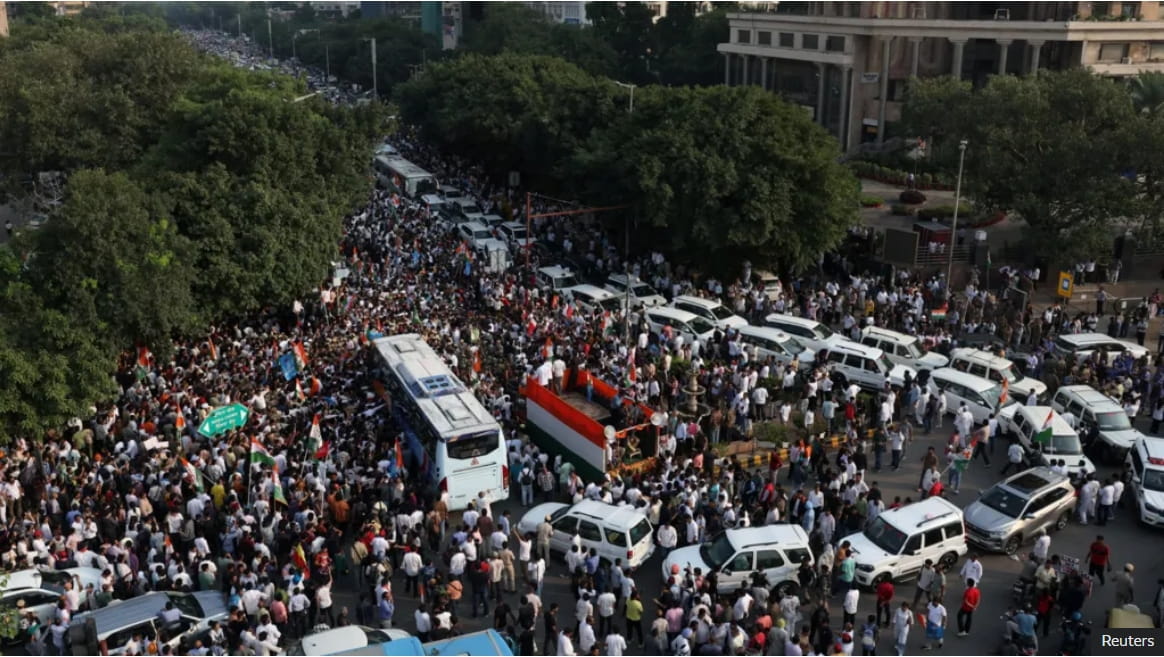
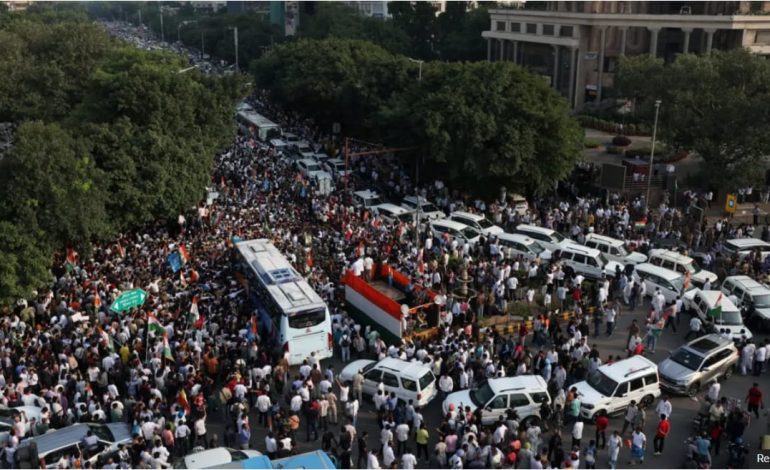
Longstanding questions about the independence and effectiveness of India’s democratic institutions have again come out in the spotlight. Recent events in the capital and a series of protests at Jantar Mantar provide an overview of prevailing institutional tension in the country. Protest at Jantar Mantar demanding the resignation of Chief Election Commissioner, Gyanesh Kumar, over the Special Intensive Revision (SIR) of electoral rolls, persistent failure of police to keep check on growing rape cases in the capital, Sexual harassment by an Assistant Commissioner of Police (ACP) against women journalists and several other incidents draw attention to ongoing India’s Institutional Risks.
A closer examination of institutional framework of India reveals that founding fathers of the constitution did not design it to depend on the mercy and goodwill of the incumbent government. The constitution assigned predefined roles to political parties, judicial system, police, the executive, the parliament and media to create a balance in power structure and fix institutional accountability.
But recent events in India’s capital have once again spotlighted longstanding questions about the independence, responsiveness, and effectiveness of key democratic institutions. Protests at Jantar Mantar demanding the resignation of Chief Election Commissioner Gyanesh Kumar over the Special Intensive Revision (SIR) of electoral rolls; allegations of sexual harassment by an Assistant Commissioner of Police against women journalists covering those protests; persistent failures in policing and prosecuting rape cases; and the Supreme Court’s ongoing, unresolved challenge to the statutory framework for appointing the Chief Election Commissioner together form a pattern that fuels arguments of institutional stress—if not outright drift toward failure.
According to available media reports, thousands of protesters have been arrested and detained after a series of protest and agitation in the capital. Sporadic protests are still taking place but police immediately detain and arrest protestors to supress it before becoming a mass protest.
The disturbing question confronting India today is therefore not simply whether one government, one political party or one constitutional authority has acted properly or improperly. It is whether the institutional mechanisms designed to correct abuses of power are themselves becoming too weak, too slow, too politicised or too distrusted to perform their constitutional role effectively. Independence of institutions, from Election Commission of India (ECI) to Supreme court, are facing the issue of perceived credibility. Critics argue that when institutions meant to act as neutral referees are viewed through a partisan lens, public trust erodes—creating what some describe as an “umpire trap,” in which even legitimate administrative actions become contested.
Importantly, V-Dem Institute has downgraded India’s status from a flawed democracy to an ‘electoral autocracy’ in its latest democracy index. Over the past one decade, there has been significant erosion in constitutional morality (Biswas, 2021).
The Congress-led Opposition’s march to the Supreme Court following the CJI’s refusal to meet its delegation highlights an enduring challenge in Indian constitutional democracy: how can the judiciary remain insulated from political pressure while ensuring that serious public grievances receive meaningful legal consideration? The Supreme Court’s constitutional authority does not depend on granting personal audiences to political leaders. Its legitimacy rests on the quality, impartiality and fairness of its judicial processes. At the same time, judicial independence should not be confused with institutional infallibility or freedom from scrutiny.
India’s Supreme Court has repeatedly defended judicial independence against executive interference. Yet critics argue that weaknesses in case allocation, delayed constitutional adjudication, opaque appointments and limited internal accountability have undermined its ability to act as a consistently independent constitutional institution.
One of the most significant institutional weaknesses is the concentration of administrative authority in the Chief Justice of India (CJI), particularly the power to allocate cases and constitute benches.
In 2018, the Supreme Court upheld the CJI’s position as Master of the Roster in Shanti Bhushan v. Supreme Court of India. The Court considered the CJI’s authority essential to the orderly functioning of the institution. However, critics argue that insufficiently transparent rules for allocating sensitive cases can create opportunities for arbitrariness or perceptions of preferential treatment.
An independent court must be able to decide important constitutional disputes within a reasonable period. Excessive delay can diminish the practical value of judicial review, particularly where a dispute concerns elections, civil liberties or the exercise of government power.
A 2025 academic analysis in the International Journal of Constitutional Law criticised the handling and prolonged pendency of significant constitutional matters, arguing that the CJI’s control over listing and bench formation can affect whether such disputes receive timely adjudication. This is a scholarly assessment, not a judicial finding that all delayed cases reflect political interference.
Comptroller and Auditor General reports have repeatedly flagged irregularities in GST collections, direct benefit transfers, skill schemes, and housing programmes, often involving weak monitoring, duplicate or bogus records, and unspent funds. These issue underline failure systemic monitoring and design failures.
A recurring theme in policy analysis is the “credible commitment” problem. Investors price not only growth potential but also the risk of policy reversal, sudden price controls, retrospective taxation, or uneven application of rules. When rules appear contingent on political or corporate proximity, mobile capital can exit and long-term investment becomes costlier. Critics point to concentrated market power in certain sectors and the perception of regulatory capture; defenders emphasise the scale of formalisation, digital public infrastructure, and reform efforts such as GST and insolvency frameworks.
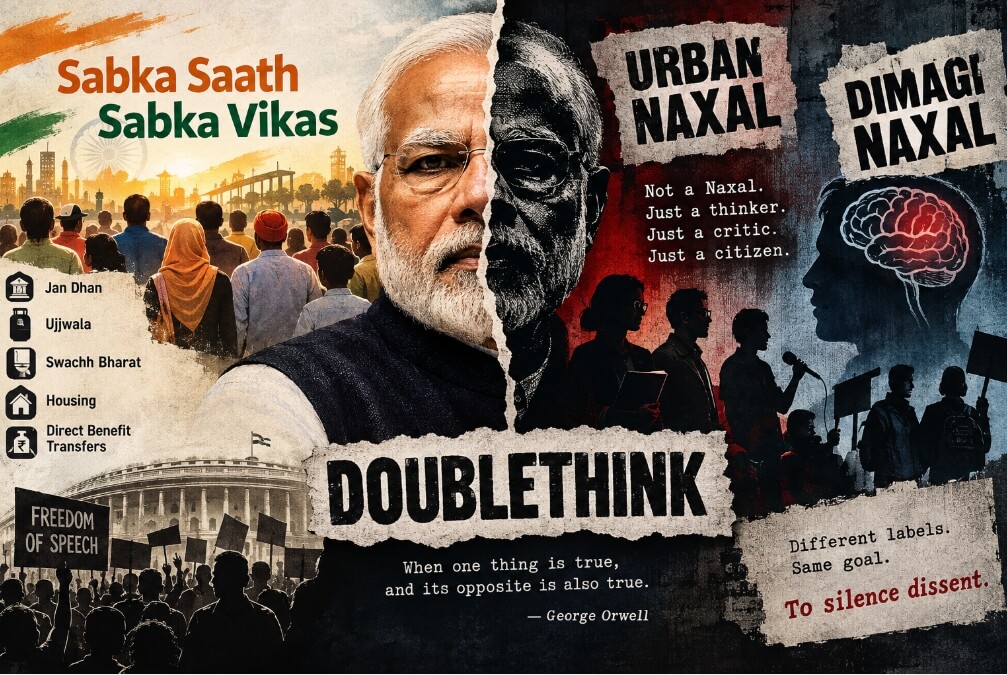
Freedom House has classified India as “partly free” in recent years which raises strong concern about the state of freedom of speech in the country. As a signatory of International Covenant on Civil and Political Rights (ICCPR), India has an obligation to protect civil and political rights, including freedom of speech. As a fundamental right, Freedom of Speech and Expression has been enshrined under article 19 (1)(a) of the Indian constitution. Yet, there have been numerous instances where it has been restricted with a purpose of enforcing other laws. But there is a growing intolerance towards dissenting voices in India, as the incumbent government has continued to supress dissenting voices whether journalists, protests or even social media posts with force, which raises concern about the health of world’s largest democracy.
During farmers protest in 2021, the government not only arrested more than 100 protesters, but also slapped draconian law, UAPA, and initiated withdrawal of passports against them (ALJAZEERA, 2021). A 22-year-old climate activist, Disha Ravi, was arrested merely for sharing a social media post in support of farmers’ protest against agricultural laws. She was charged for criminal conspiracy and spreading disharmony on religious, social and cultural grounds (BBC, 2021).
Another glaring example, Ali Khan Mahmudabad, an associate professor at Ashoka University, was arrested for his social media post, that exposed the government’s covert effort of propagating hate mongering in the country. For his social media post, he was charged for endangering national sovereignty and promoting hatred between groups.
The incumbent government is not only restricting citizens’ fundamental right of freedom of expression and opinion but also undermining democratic values through prolonged incarceration of activists, journalists and writers (The Hindu, 2024). Student activists like Umar Khalid and Sharjeel Imam are languishing prison without trial over past five years (Pandey and Day, 2026).
While freedom of speech is a fundamental right in India mandated by the Indian constitution, it is not absolute, as the has power to impose reasonable restriction under article 19(2). Reasonable restriction can be imposed in cases concerning sovereignty of the state, public order, decency or m orality, friendly foreign relations, incitement of violence and defamation (Drishti IAS, 2025). There is an alarming trend in the country over past one decade as the government has started criminalised protests. India enacted Unlawful Prevention Activities Act (UAPA) to protect the state from heinous crimes. It is rather disturbing to observe that the incumbent government has been using this draconian law to silence critics, including journalists, activists and political adversaries. These issues underline India’s institutional Risks overtly.
Freedom of expression is a fundamental human right that must be upheld in democratic societies. But protecting freedom of expression poses a completely new challenge for states in the contemporary era of social media, as it facilitates anyone to express view at global scale, helping anti-social people to mobilise people and incite violence (Siagian, Siahaan, and Hamzah, 2023). Concomitantly, there exist enough ambiguity in the very definition of article 19(2), which imposes reasonable restrictions on freedom of speech. There is an urgent need of law to provide exclusive definition of reasonable restrictions under article 19(2).
Strangling freedom of speech merely on trivial issues is grossly inconsistent with John Stuart Mill’s, the ‘marketplace of ideas’ paradigm, which postulates that throttling freedom of speech will make the marketplace devoid of dynamic ideas. Therefore, curtailing freedom of speech on frivolous grounds will not only prove counterproductive to idea of vibrant and a multicultural democracy but also can retard human development, including economic development.
Since 2014, allegations of selective use of central agencies and inducements in political realignments have been a major feature of Indian politics, particularly involving the Enforcement Directorate (ED) and Central Bureau of Investigation (CBI). Opposition parties, independent investigations, and data analyses frequently describe this as a pattern that facilitates party splits and defections to the BJP or its allies. The government and agencies maintain that actions are based on evidence of financial crimes or corruption, not politics. Nevertheless, opposition parties and critics term selective use of investigating agencies to harass opponents as a ‘Washing Machine Phenomenon.
These dynamics are not entirely new—horse-trading and agency pressure have precedents under previous governments—but the scale, the concentration on central agencies with expanded PMLA powers, and the consistent correlation with realignments toward the ruling party have intensified the debate since 2014. The anti-defection law (Tenth Schedule) was meant to curb this but has proven porous through resignations, mergers, and delayed Speakers’ decisions.
Institutional weakness does not preclude short-term economic or diplomatic gains. It does, however, raise the cost of governing a complex, diverse, and youthful society. Youth unemployment and underemployment concerns, combined with declining trust in pathways through education, examinations, and jobs, can fuel protest and alienation. When citizens lose faith that elections, courts, regulators, and bureaucracy will deliver fair outcomes, the system’s legitimacy and problem-solving capacity suffer. More importantly, institutional paralysis may aggravate the risk of authoritarian regime in the long term. Thus, India’s Institutional Risks is multifaceted.
Citations
ALJAZEERA, 2021. BJP deploys its majoritarian tactics against India’s farmers [Online] https://www.aljazeera.com/opinions/2021/2/13/bjp-deploys-its-majoritarian-tactics-against-indias-farmers
Basu, S. and Sen, S., 2024. Silenced voices: Unravelling India’s dissent crisis through historical and contemporary analysis of free speech and suppression. Information & Communications Technology Law, 33(1), pp.42-65.
BBC, 2021. India activist Disha Ravi arrested over farmers’ protest ‘toolkit [online] https://www.bbc.com/news/world-asia-india-56060232
BBC, 2026. Thousands march to Indian Supreme Court to demand election chief resign: https://www.bbc.com/news/articles/cwr5y2lgr4gdo
Drishti IAS, 2025. Reaffirming Free Speech in a Constitutional Democracy. [online] https://www.drishtiias.com/daily-updates/daily-news-editorials/reaffirming-free-speech-in-a-constitutional-democracy
Gupta, S. 2024. Silencing Voices: An In-Depth Analysis Of Freedom Of Speech And Expression On Social Media Platform In Context Of India’s IT Act, Indian Journal of Law and Legal Research
ISSN: 2582-8878 [online] https://www.ijllr.com/post/silencing-voices-an-in-depth-analysis-of-freedom-of-speech-and-expression-on-social-media-platform
Howie, E., 2018. Protecting the human right to freedom of expression in international law. International journal of speech-language pathology, 20(1), pp.12-15.
NDTV, 2022. Journalist Who Exposed Roti-Salt Meal In UP School Dies Of Cancer [online] https://www.ndtv.com/india-news/pawan-jaiswal-journalist-who-exposed-roti-salt-meal-in-up-school-dies-of-cancer-2948360
Pandey, G. and Day, A. 2026. No bail for Indian activists after five years in jail without trial, BBC [online] https://www.bbc.com/news/articles/cd0ye2z33x9o
Rashid, O. 2019. Journalist who exposed salt-roti meal in school booked by UP govt. The Hindu [online] https://www.thehindu.com/news/national/other-states/journalist-who-exposed-salt-roti-meal-in-school-booked-by-up-govt/article29320560.ece
Siagian, R., Siahaan, L. and Hamzah, M.I., 2023. Human rights in the digital era: online privacy, freedom of speech, and personal data protection. Journal of Digital Learning and Distance Education, 2(4), pp.548-558.
The Hindu, 2024. ‘Writers, journalists, social activists being jailed for merely criticising Indian government’ [online] https://www.thehindu.com/news/national/writers-journalists-social-activists-being-jailed-for-merely-criticising-indian-government/article68007391.ece
https://cpj.org/2026/02/indian-journalist-ravi-nair-sentenced-to-1-year-in-adani-defamation-case/
Yadav, N. 2025. Bail for Indian professor arrested for comments on India-Pakistan conflict, BBC [online] https://www.bbc.com/news/articles/c93llyrrze7o
Biswas, S. 2021. ‘Electoral autocracy’: The downgrading of India’s democracy, BBC [online] https://www.bbc.com/news/world-asia-india-56393944
Reuters, 2026. Protesters seeking India election chief’s ouster detained, as ‘cockroach’ leaders released: https://www.reuters.com/world/asia-pacific/indian-capital-braces-second-day-protests-against-poll-chief-2026-10-11/