
Haldighati to Kumbhalgarh: A Journey Through the Valour, Heritage and History of Mewar
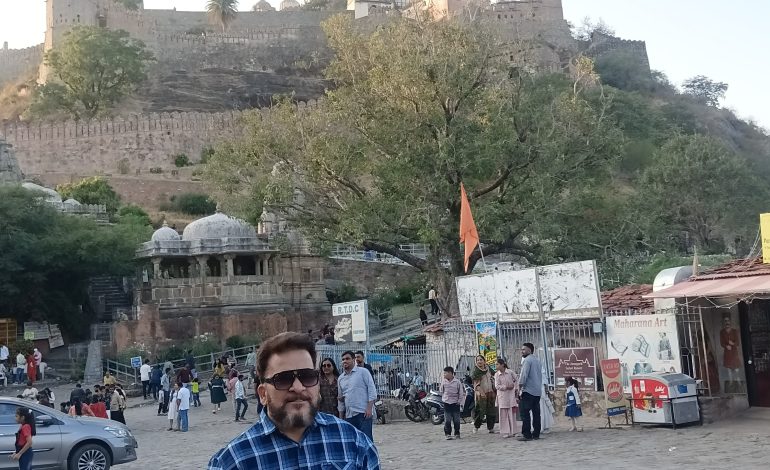

Haldighati to Kumbhalgarh | Rajasthan Tourism | Historical Places in Rajasthan
Rajasthan is a land where history is not merely preserved in monuments and museums; it lives in its mountains, forts, lakes and the stories passed down through generations. My journey from Udaipur to Haldighati and subsequently to Kumbhalgarh was one such experience—a journey that transported me to an era of extraordinary courage, sacrifice and patriotism. The majestic Aravalli Hills, the historic battlefield of Haldighati, the legendary story of Chetak and the magnificent fort of Kumbhalgarh made this excursion an unforgettable experience.
Haldighati: Where the Soil Remembers the Courage of Maharana Pratap
I started from Udaipur at around 9 am for Haldighati, situated approximately 40 kilometres away. After travelling for about one and a half hours, we reached our destination. Even before exploring the historical sites, the landscape caught my attention. The hills, characterised by their distinctive yellowish soil and soft stone formations, presented a fascinating spectacle.
Haldighati is not an ordinary mountain pass. It is a place that witnessed one of the most celebrated battles in Indian history. On 18 June 1576, the forces of Maharana Pratap, the valiant ruler of Mewar, confronted the Mughal army commanded by Raja Man Singh I of Amber, under Emperor Akbar. Although the battle did not result in a decisive Mughal victory in the conventional sense of capturing Maharana Pratap, it became an enduring symbol of resistance and the determination to defend one’s homeland.
Standing amidst these hills, I could almost imagine the intensity of the confrontation. The rugged terrain offered strategic advantages to the local forces, particularly in employing guerrilla warfare tactics. The landscape seemed to tell its own story of courage, military strategy and sacrifice.
A little farther away, I noticed some tourists collecting dust and soil from the hillside in polythene bags. Perhaps, they were taking home a small souvenir of a place that holds immense historical and emotional significance for Indians. Local folklore associates the yellow soil of Haldighati with the bloodshed of the historic battle. The nearby Rakt Talai, popularly remembered as the ‘Lake of Blood’, is also associated with stories of the intense fighting and casualties. Whether interpreted through historical records or local traditions, these places evoke powerful emotions.
My cab driver, who was familiar with the area, guided me towards the nearby museum, situated within a short distance of approximately 200 metres.
Maharana Pratap Museum: Reliving the Legend of Chetak
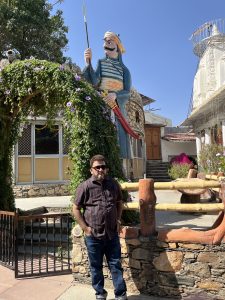
At the entrance of the museum, a magnificent monument dedicated to Chetak, the legendary horse of Maharana Pratap, immediately attracted my attention.
The story of Chetak is among the most moving episodes associated with the Battle of Haldighati. According to popular accounts, Chetak sustained a severe injury to one of his legs during the battle but continued carrying his master to safety. He is remembered for making a remarkable leap across an obstacle, often identified in popular retellings as a stream, before collapsing after ensuring Maharana Pratap’s escape.
The story is remembered not merely as an account of a horse’s loyalty but as an extraordinary example of devotion between a warrior and his companion. The monument beautifully commemorates this enduring bond.
As I explored the museum, its exhibits and audio-visual presentations on Maharana Pratap transported me to the sixteenth century. The documentaries recreated the atmosphere of the battle and introduced visitors to the life, struggles and military achievements of the legendary ruler. For a while, I felt as though I had travelled backwards in time to witness the events that shaped the history of Mewar.
After spending approximately one and a half hours at Haldighati, we resumed our journey towards Kumbhalgarh.
Kumbhalgarh: The Magnificent Fortress of Mewar
The journey from Haldighati to Kumbhalgarh was equally fascinating. The undulating landscape of the Aravalli Hills, with its rugged mountains, winding roads and occasional glimpses of greenery, made the drive particularly enjoyable. Every hill seemed to have a story of valour, sacrifice and devotion to the motherland.
Kumbhalgarh is not simply a historical monument; it represents the military strength, architectural excellence and political aspirations of the rulers of Mewar. The fort was constructed by Rana Kumbha during the fifteenth century, primarily between 1443 and 1458. It occupies a strategically important position in the Aravalli mountain range and served as a formidable defensive stronghold as well as a refuge for the rulers of Mewar during difficult times.
Interestingly, Kumbhalgarh is also regarded as the birthplace of Maharana Pratap, adding another important dimension to its historical significance.
Navigating the rocky and winding terrain in our taxi was an exciting experience. By the time I reached Hotel Rajgarh in Kumbhalgarh, it was already 2 pm.
There was some confusion regarding my hotel reservation. However, the hotel manager, Mr Narendra Singh Bhati, handled the situation with considerable patience and professionalism. He resolved the booking issue and arranged a comfortable room for me. His courteous behaviour and willingness to make every possible effort to ensure a pleasant stay left a lasting impression. His hospitality became an important part of my overall travel experience.
After relaxing for about an hour, I set out to explore the magnificent Kumbhalgarh Fort through a jeep safari. It took barely ten minutes to reach the fort from the hotel.
Kumbhalgarh Fort: A Marvel of Rajput Military Architecture
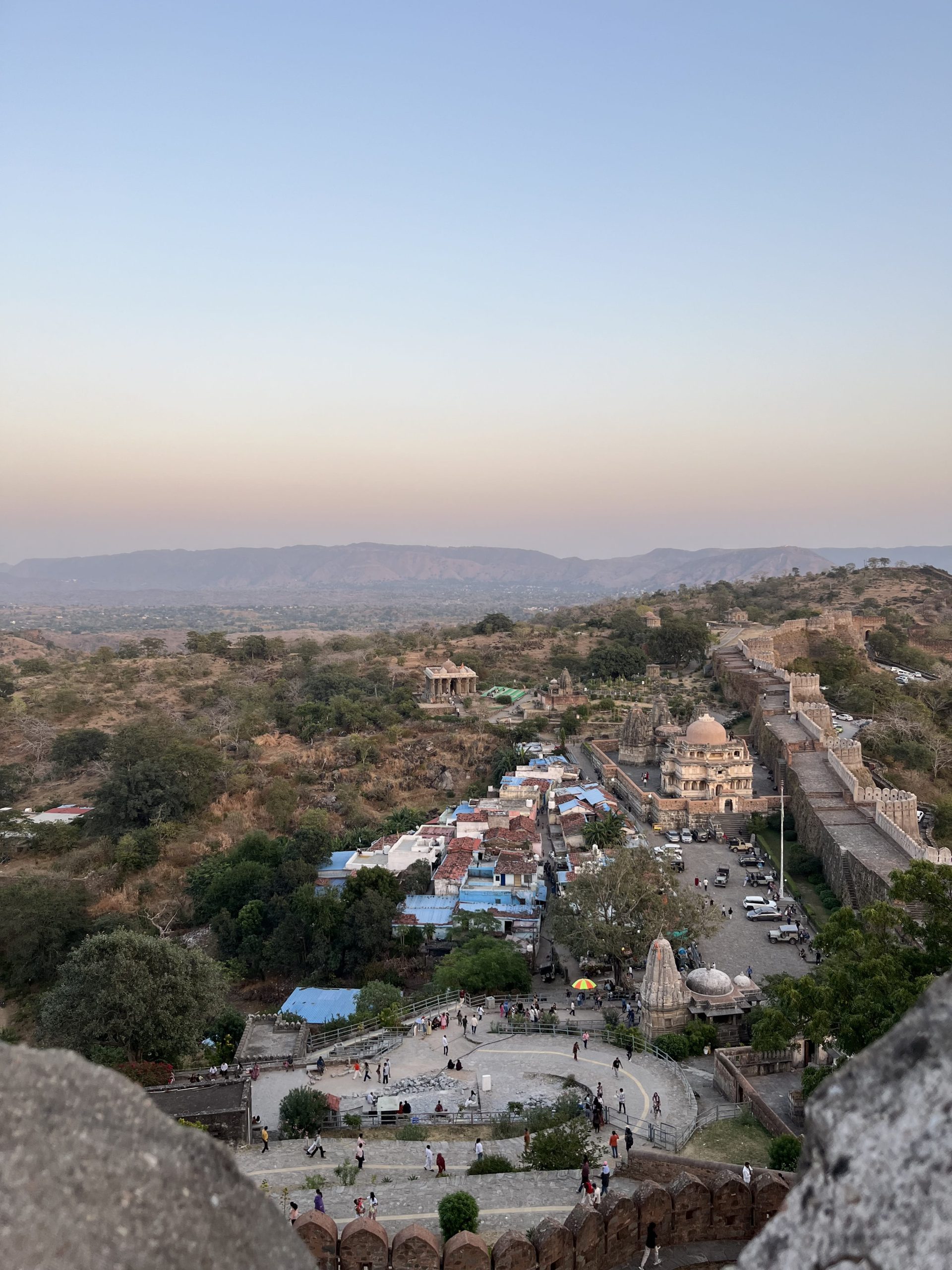
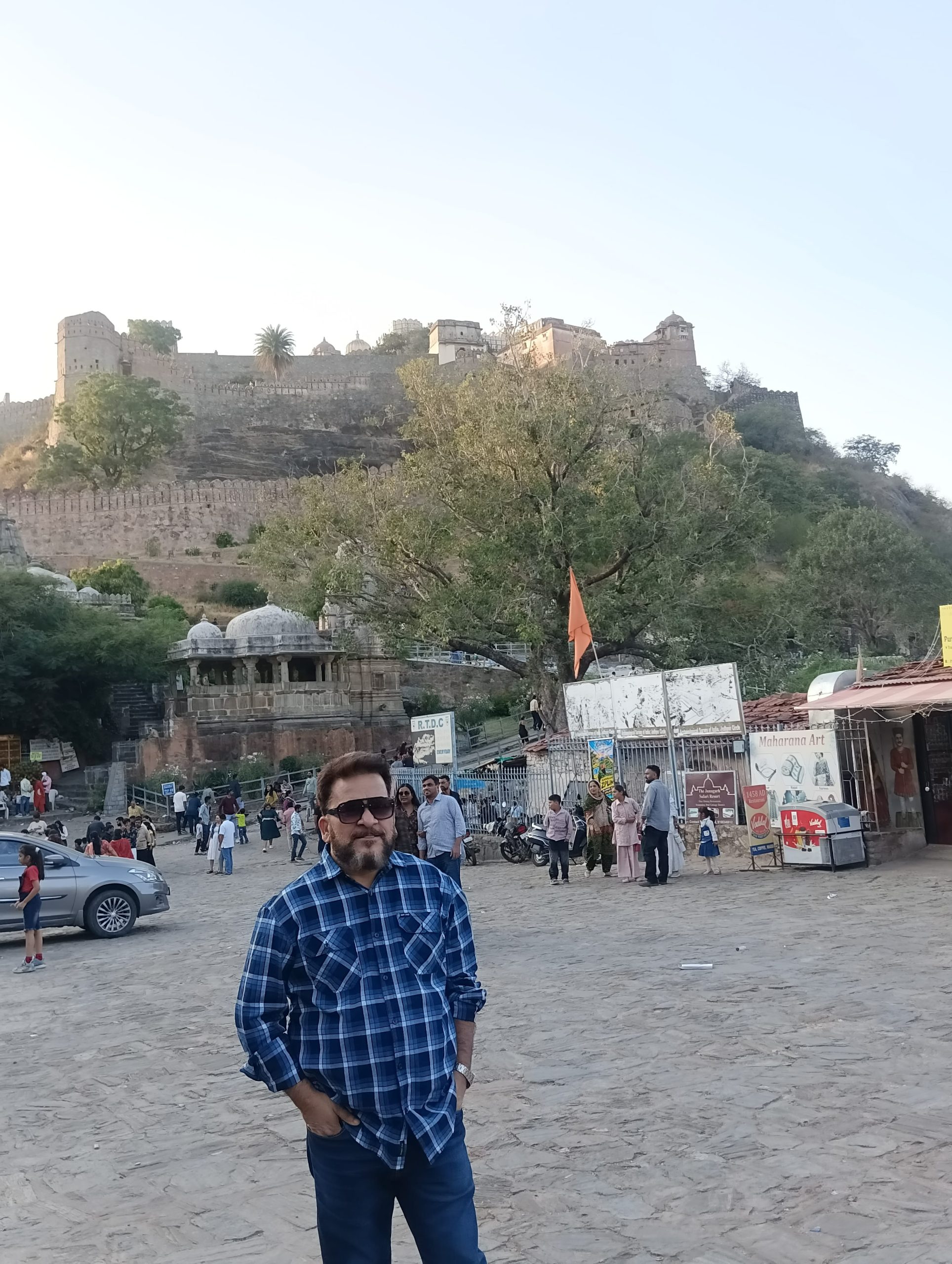
The moment I approached the fort, I was struck by its sheer scale and imposing architecture. Built on a mountainous landscape, the fortress seemed to rise naturally from the surrounding hills. Its massive stone walls, imposing gateways, watchtowers and sprawling complex conveyed the military preparedness and architectural vision of its builders.
Kumbhalgarh is particularly famous for its approximately 36-kilometre-long fortification wall, widely regarded as the second-longest continuous fort wall in the world after the Great Wall of China. The wall follows the natural contours of the Aravalli Hills and is an extraordinary example of medieval military engineering. Its width is traditionally described as sufficient for eight horses to walk abreast.
The fort is also part of the UNESCO World Heritage property known as the Hill Forts of Rajasthan, which recognises the exceptional military architecture and cultural significance of Rajasthan’s historic hill forts.
Walking through the sprawling fort complex was an experience in itself. Its massive gateways, winding pathways, defensive structures and remnants of palaces offered glimpses into the grandeur of the Mewar kingdom. The fort’s elevated position provided spectacular views of the surrounding Aravalli landscape.
One of the important attractions within the complex is Badal Mahal, also known as the Palace of Clouds. Situated at the highest point of the fort, it offers beautiful views of the surrounding hills. The fort complex also contains several Hindu and Jain temples, reflecting the religious and cultural traditions of the period.
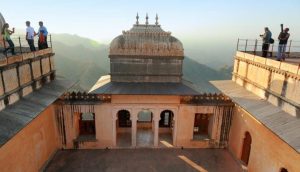
Badal Mahal
The Neelkanth Mahadev Temple, dedicated to Lord Shiva, is another noteworthy attraction. Its impressive stone Shivling and distinctive temple architecture make it an important spiritual landmark within the fortress. The Golerao Jain Temples, a group of nine temples decorated with intricate sculptures, further demonstrate the artistic excellence of the period.
Exploring this massive fort was physically demanding, but the experience was immensely rewarding. It was difficult not to admire the foresight of Rana Kumbha, who transformed a challenging mountainous landscape into one of the most impressive defensive structures in India.
The fort also has a special connection with Maharana Pratap, who was born here. Standing within its historic precincts, I could appreciate the significance of this fortress in shaping the political and military history of Mewar.
Parshuram Mahadev Temple: A Spiritual Retreat in the Aravallis
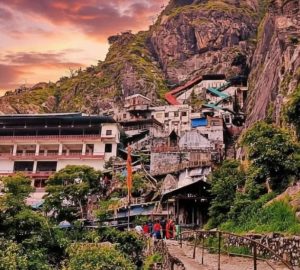
Parashuram Mahadev Temple
After returning from Kumbhalgarh Fort, we visited the Parshuram Mahadev Temple, a fascinating cave shrine dedicated to Lord Shiva in the Aravalli Hills.
The temple is associated with the popular legend of Parshuram, the sixth incarnation of Lord Vishnu. According to local tradition, Parshuram created the cave with his axe and worshipped Lord Shiva at this secluded location. The shrine is known for its natural rock formations and cave setting, which give it a distinctive spiritual character.
Unlike the grandeur and imposing scale of Kumbhalgarh Fort, the temple offered a completely different experience. Its peaceful surroundings, natural landscape and spiritual atmosphere provided a welcome contrast to the historical exploration of the day.
The visit reminded me that the Aravalli region is not only a treasure trove of military history and architectural heritage but also an important centre of religious faith and cultural traditions.
A Rajasthani Folk Evening: Hospitality and Cultural Memories
By the time I returned to the hotel, I was beginning to feel a little cold. The pleasant chill in the air reminded me of a hill station. The temperature, the mountainous surroundings and the peaceful atmosphere made Kumbhalgarh particularly refreshing after the warmth and bustle of the plains.
An unexpected cultural experience awaited me at the hotel. The hotel staff had organised a Rajasthani folk music programme, and I had the opportunity to become part of this delightful celebration.
Rajasthani folk music is an integral part of the state’s cultural identity. Its traditional melodies, indigenous musical instruments and colourful performances reflect the rich heritage of the desert state. The music added a wonderful cultural dimension to my historical excursion.
The hotel manager, Mr Narendra Singh Bhati, graciously invited us to join the dinner. We wholeheartedly accepted his invitation and enjoyed his hospitality.
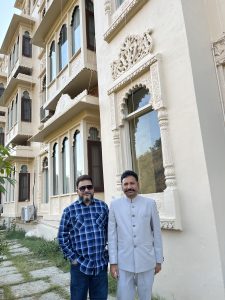
Me and Narendra Singh Bhati
His personal attention, warmth and efforts to make guests feel comfortable deserve special appreciation. Travel experiences are not always defined by monuments and scenic locations; sometimes, the kindness of people makes an equally lasting impression. My interaction with Mr Bhati was a perfect example of this.
Conclusion: A Journey That Connected History, Nature and Culture
My excursion from Udaipur to Haldighati and Kumbhalgarh turned out to be much more than an ordinary sightseeing trip. It was an opportunity to connect with the glorious history of Mewar, understand the extraordinary courage of Maharana Pratap, appreciate the loyalty of Chetak and admire the architectural brilliance of Rana Kumbha.
Haldighati reminded me of the sacrifices made in defence of sovereignty and honour. Kumbhalgarh Fort offered a glimpse into the military ingenuity and architectural achievements of medieval India. Parshuram Mahadev Temple provided spiritual tranquillity, while the Rajasthani folk music programme and the warm hospitality of the hotel staff added a memorable human touch to the journey.
As I reflected on the day’s experiences, one thought remained with me: the hills, forts and temples of Rajasthan are not merely remnants of the past. They are living reminders of a civilisation that valued courage, loyalty, faith and hospitality.
I returned with memories of magnificent landscapes, fascinating historical narratives and warm human interactions. Indeed, the journey from Haldighati to Kumbhalgarh was an enriching experience that will remain etched in my memory for years to come.
Author: D.Chandra, 2026