
Ram Mandir Donation Scandal: A cocktail of patriarchy, religion and corruption
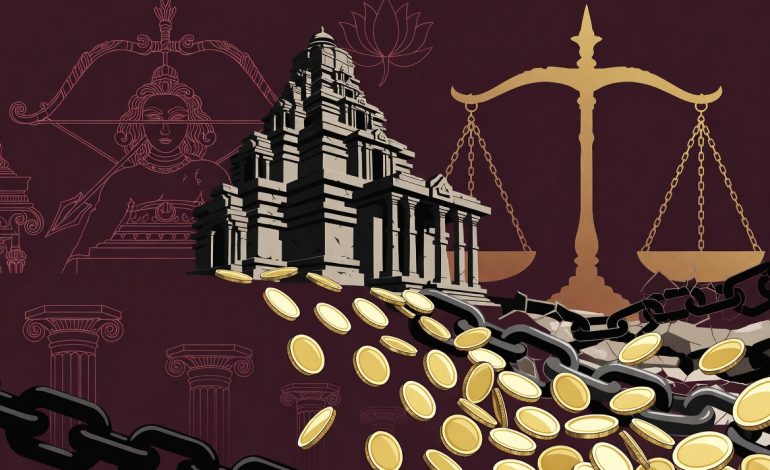

Across civilisations, religious institutions continued to serve as fulcrum of moral authority, economic power and communal identity. Historically, they have not only nurtured patriarchal structures but played crucial roles in concentrating authority in male hierarchies through mythological narratives to legitimize dominance of religion and male authorities in social, political and family lives, creating opaque structures entrenched in corruption and casteism. Consider the emergence of Devdasi culture between 900-1000 A.D in the Vaishnavaite temples in South India. This tradition was deeply embedded in casteism and oppression of women, as Devdasi inherently belonged to the lower caste (Forrest Essentials, 2020). While corruption in religious institutions is not new, the Ram Mandir Donation Scandal exposes how the nexus between religion and politics can create a completely patriarchal organisation solely for conducting business of faith, completely devoid of accountability. The case of Ram Mandir Donation Scandal underscores how patriarchal systems exacerbate accountability deficit to shield a network of elite, powerful and influential people.
Patriarchy, myth and religious power
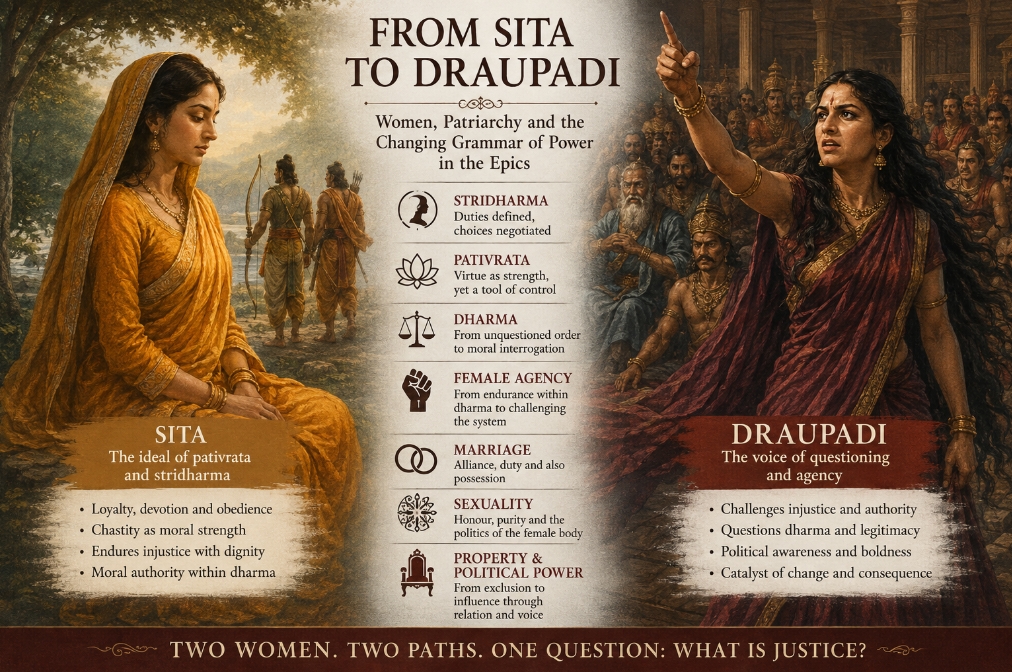
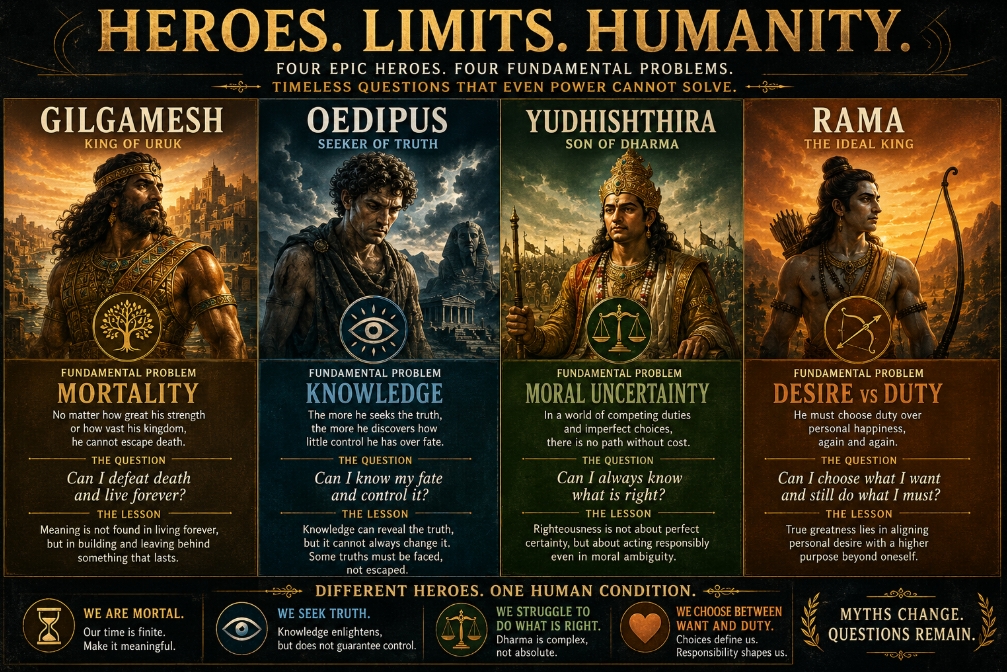
Patriarchy can be defined as systems, where power, authority and inheritance are inherently male centred. Feminist scholars like Gerda Lerner trace roots of patriarchy around 4000 BCE in Mesopotamia, where the discovery of biological paternity, entangled in advancement in warfare and accumulation of property, led to entrenchment of patrilineal control over female sexuality to ensure continuity and lineage. If we carefully decipher events, stories, folklore and epics such as Ramayana, Mahabharata and exceedingly diverse Hindu mythology, they appear significantly entangled in patriarchy. It is the patriarchy that championed Rama and the utopian idea of Ramrajya. From secular Mahatma Gandhi to communal Lal Krishna Advani, sold the utopian idea of Ramrajya in one form or another. However, neither religious leaders nor politicians questioned why Sita had to go through Agni-Pariksha (fire-test). It is the patriarchal system that introduced the concept of purity and chastity to exercise control and ownership over women’s sexuality. While numerous temples provided a sacred space where devotees can connect with God by offering prayers, they have acted as repositories of corruption and patriarchy, due to a lack of accountability of public funds (Devdana) or donation by the public.
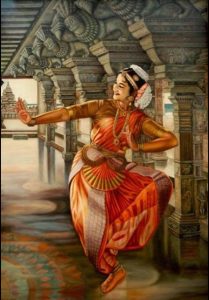
A devdasi performing in a temple
How Ram Mandir corresponds to a patriarchal structure
Historically, the Rashtriya Swayam Sevak Sangh (RSS) has played a significant and poignant role promoting the Ram Temple Movement. The RSS provided both ideological and organisational support for the Ram Temple Movement. However, the organisational structure of the RSS is principally anchored on patriarchy because of factors such as full male membership (Swayam Sevak) and reinforcement of traditional gender roles.
Elevation of Narendra Modi on India’s political landscape as the only mass leader and his acumen to exploit communal space fully and every possible faultline brazenly played a crucial role in communalising the nation’s psyche and creation of Ram Temple. Prime Minister Narendra Modi exercised exclusive copyright over religious ritual performed on the occasion of Bhumi Pujan and temple inauguration (BBC, 2024). It is important to note that trustees of Sree Ram Janmbhoomi Teerth Kshetra Trust are appointed by the government of India. On 5 February 2020, Prime Minister Modi announced the formation of this trust in Parliament. According to the official website, there are 14 trustees in Sree Ram Janmbhoomi Teerth Kshetra Trust. Among trustees, there are four ex-officio members or senior government officials, who directly report either to Prime Minister Office (PMO) or Ministry of Home Affairs (MHA). When everything is reported to, and decided by PMO, to what extent it is plausible to dissociate Ram Mandir Donation Scandal and Prime Minister Narendra Modi.
Composition of Sree Ram Janmbhoomi Teerth Kshetra Trust is completely patriarchal with elitist overtone, as all members are male and they work under divine guidance in inspiration from almost godlike patriarchal leaders like Narendra Modi, Jogi Adityanath and Mohan Bhagwat. These patriarchal figures have championed the cause of the grand mythological narrative of righteous kingship inspired by Ramayana and Ramrajya. Inclusion of feamle members could have helped the organisation to become more empathentic, creative and transparent. Nevertheless, the scandal underscores how male dominated religious settings can exhibit low transparency, deeply embedded in zero accountability.
Harnessing power of religion
According to Max Weber’s theory of power and charisma, there are three types of authority:
- Traditional authority (vested in customs and traditions)
- Charismatic authority (Vested in extraordinary quality of leaders)
- Legal and rational authority (vested in bureaucratic rules and laws) (Breuilly, 2011)
Prime Minister Narendra Modi has championed all three forms of authorities postulated by Max Weber. He has been successful in mastering traditional authority by positioning himself as Guardian of Hindu Dharma. He exhibits charismatic authority by reinforcing the image of Vishwa Guru (World Leader) among his followers through propaganda, captive media (Godi media) and cheap tactics such as presenting melody (toffee) to Melony (Italian Prime Minister). He commands complete dominance over legal and rational authority by exercising control over institutions.
Concluding remark
Ram Mandir Donation Scandal underscores how crystallisation of power using a cocktail of religion, politics and communal tension can create an opaque organisational structure like Sree Ram Janmbhoomi Teerth Kshetra Trust to champion the cause of patriarchal figures. We are living in an era of hype-digitisation where each and every transaction can be tracked using blockchain technology, but it works on a decentralised model, principally because of the requirement of keeping decentralised ledgers. But again, it is too much to expect from our non-biological prime minister working relentlessly to create a centralised system that supports: ‘one nation, one leader’, ‘one nation one businessman’, and ‘one nation, one religion’.
D.Chandra, 2026
References
BBC, 2024. Ayodhya Ram Mandir: India PM Modi inaugurates Hindu temple on razed Babri mosque site [online] https://www.bbc.com/news/world-asia-india-68003095
Breuilly, J., 2011. Max Weber, charisma and nationalist leadership 1. Nations and nationalism, 17(3), pp.477-499.
Hindustan Times, 2020. Ram Temple trust to have 15 members, one seat set aside for Dalit [online] https://www.hindustantimes.com/india-news/one-of-the-members-in-ram-temple-trust-will-always-be-a-dalit-amit-shah/story-OSAWFu0btNk3R7kVYr3myK.html
Forrest Essentials, 2020. History of the Devadasi System in India [online] https://www.forestessentialsindia.com/blog/women-of-substance-a-journey-through-the-devadasis-culture-in-india.html?srsltid=AfmBOopxXmISwbO6Scc-m9MPyaCCaYxq7M3WXlsSdQ_7-ZOZmiQrMD9p
The Wire, 2026. Know Your Ram Temple Trust: Who Are The People Officially Representing the Modi Govt to Ensure Oversight? [online] https://thewire.in/religion/know-your-ram-temple-trust-who-are-the-people-officially-representing-modi-govt
https://srjbtkshetra.org/trust-members/