
The Past Is Never Dead: Historicism, Memory, and the Battle for India’s History


“There is no document of civilization which is not at the same time a document of barbarism.”
— Walter Benjamin
History has always arrived wearing the mask of certainty.
It speaks in the language of chronology, archives, dates, monuments and empires, persuading us that the past exists as a stable repository waiting patiently to be discovered. Yet history has never been merely discovered. It has always been narrated, edited, curated and performed. The archive is not innocent; neither is memory. Every civilization writes itself into existence by deciding what deserves remembrance and what ought to disappear into silence.
Maurice Mandelbaum captured this impulse when he defined historicism as the belief that “an adequate understanding of the nature of any phenomenon and an adequate assessment of its value are to be gained through considering it in terms of the place it occupied and the role which it played within a process of development.” Implicit within this definition lies an almost comforting faith—that the essence of things resides in their historical becoming.
But the twentieth century taught us something profoundly unsettling.
Perhaps history is not simply the story of becoming.
Perhaps it is also the story of exclusion.
The Enlightenment’s Beautiful Illusion
The European Enlightenment imagined history as a disciplined march towards reason.
Humanity, according to this imagination, travelled from superstition to science, from irrationality to rationality, from darkness to progress. History became the empirical witness to civilization’s ascent. The historian emerged as its impartial chronicler.
This confidence profoundly shaped modern historiography.
Yet the very century that celebrated universal reason also produced colonialism’s epistemic violence. The same rationality that claimed universality legitimized slavery, imperial conquest and the civilizing mission. Europe’s history gradually became the world’s history, while other civilizations were positioned as societies awaiting entry into modernity.
Dipesh Chakrabarty famously described this predicament as the necessity of “provincializing Europe.” His intervention was never an argument against Europe but against Europe’s transformation into history’s universal subject. Why, he asked, should every society be compelled to narrate itself through categories forged within European modernity?
The question destabilizes not only Enlightenment philosophy but historicism itself.
If history has multiple temporalities, then there can be no single road to modernity.
Figure 1:Enlightenment

History as Narrative, Not Mirror
Hayden White complicated matters further.
History, he argued, does not merely recover facts; it organizes them into stories. Historians inevitably employ literary devices—plot, tragedy, romance, satire, comedy—to produce coherence from fragments. Historical writing therefore resembles literature far more than nineteenth-century positivists were willing to admit.
Facts alone never constitute history.
Narrative does.
The implication is both liberating and dangerous.
Liberating because it exposes the illusion of objective neutrality.
Dangerous because once history is recognized as narrative, political regimes inevitably seek to become its principal authors.
The battle over history is therefore never about archives alone.
It is about storytelling.
Benjamin’s Angel Looks Back
Walter Benjamin perhaps offered the most haunting image of historical consciousness.
His “Angel of History” faces the past while being blown relentlessly into the future by the storm called progress. Where humanity sees a chain of events, the angel sees “one single catastrophe which keeps piling wreckage upon wreckage.”
Benjamin rejected history’s comforting linearity.
Progress, he insisted, is often merely accumulated violence narrated as civilization.
This insight feels uncannily contemporary.
For every monument celebrating victory, there exists another memory buried beneath it.
For every national hero, there are forgotten labourers, displaced communities and erased languages.
Civilizations do not merely remember.
They curate remembrance.
Listening to the Silences
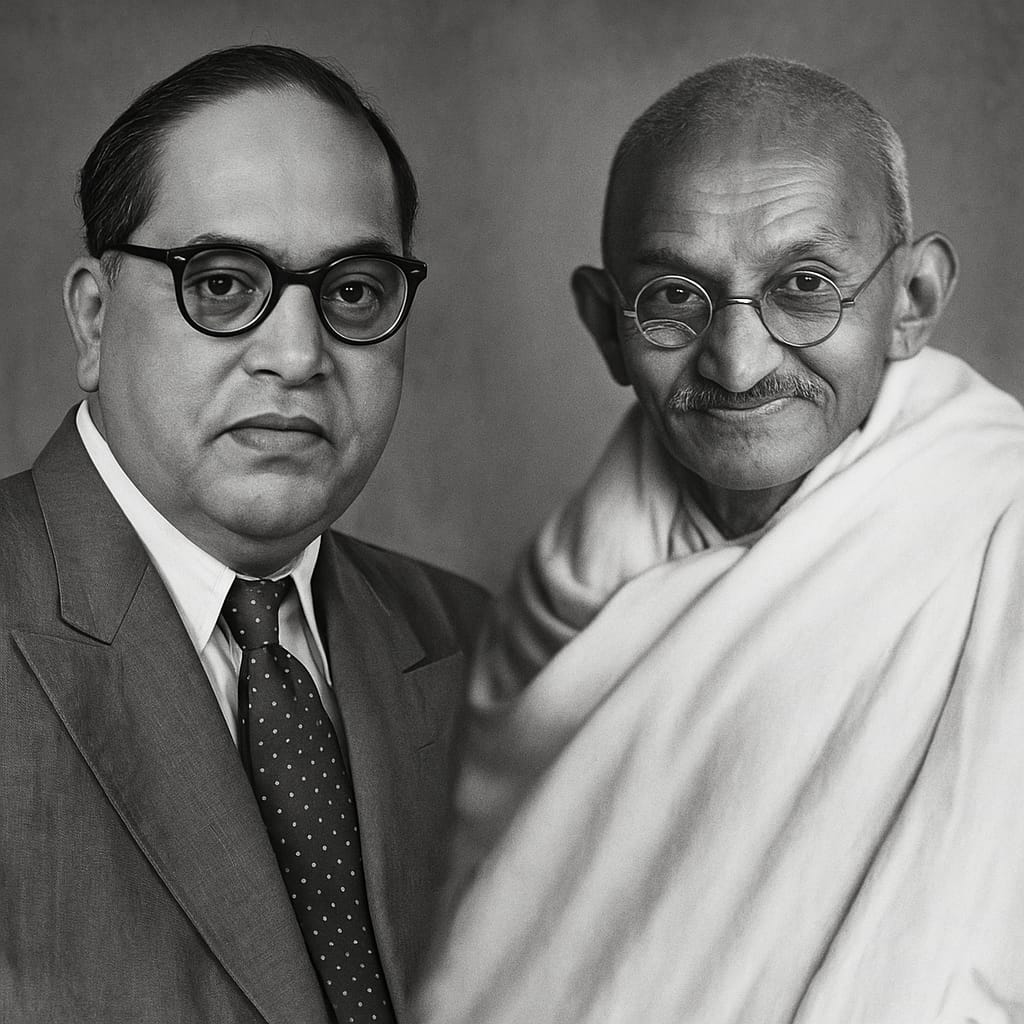
Indian historiography underwent a profound transformation when the Subaltern Studies collective challenged elite historical narratives.
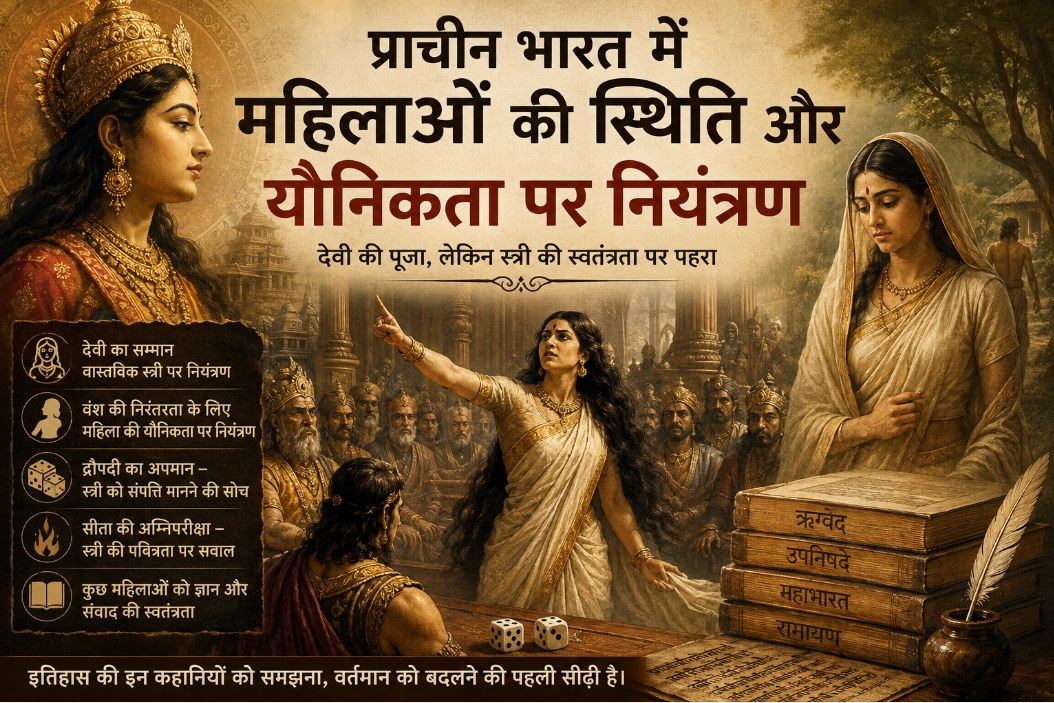
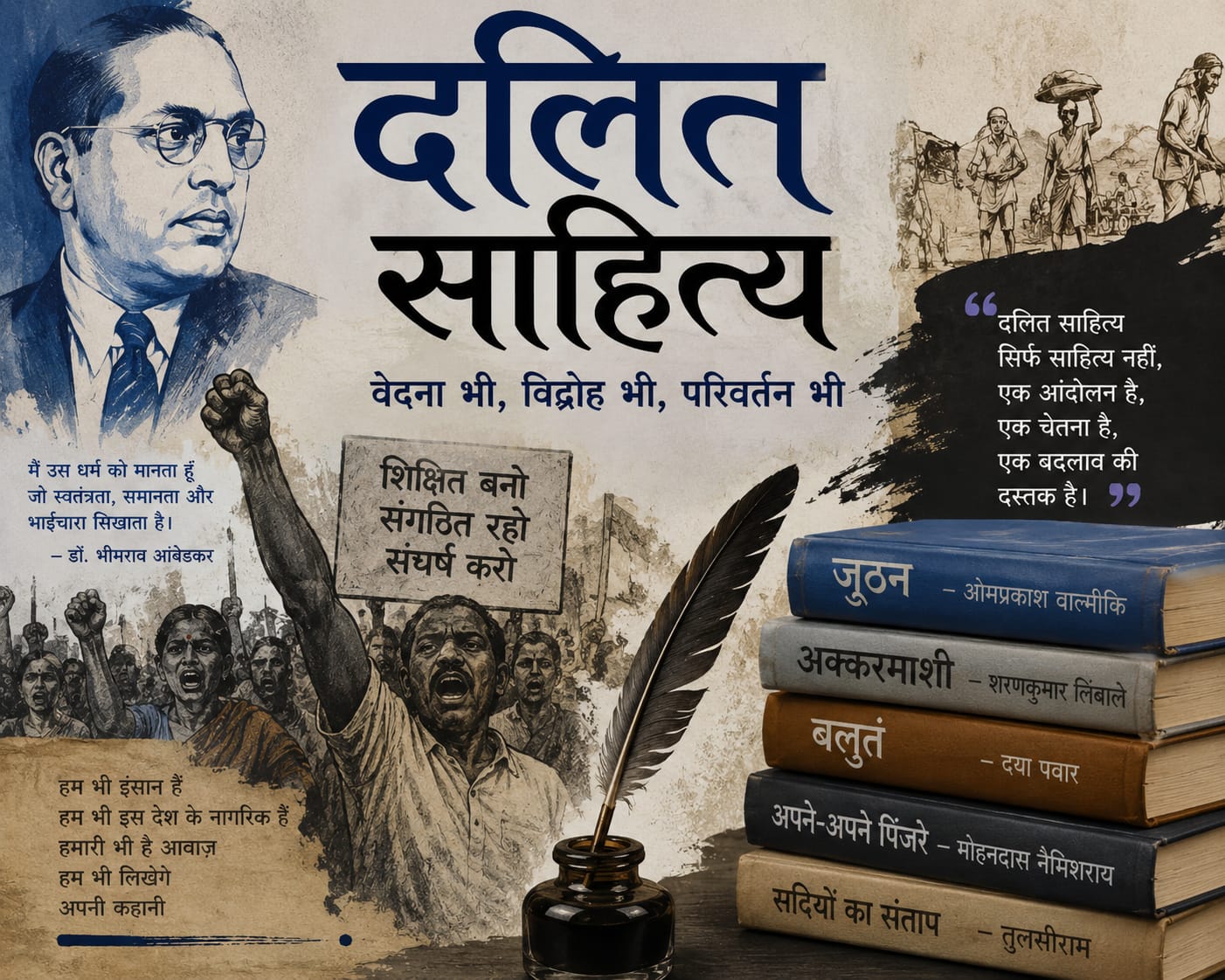
Ranajit Guha argued that Indian nationalism had largely been written from above—through colonial administrators, nationalist leaders and state institutions. Missing were peasants, workers, Adivasis, women and those who inhabited history without leaving official archives.
The subaltern was not absent because they lacked history.
They were absent because dominant historiography lacked the language to hear them.
History, Guha suggested, is as much about silence as speech.
To read history critically therefore requires attending to archival absences—to what official documents deliberately refuse to acknowledge.
Romila Thapar has consistently defended precisely this understanding of history. Against attempts to reduce India’s past into civilizational mythology or political slogan, she reminds us that historical inquiry depends upon evidence, debate and revision. History is never sacred because its strength lies precisely in its openness to correction.
The moment history becomes immune to questioning, it ceases to be history.
It becomes doctrine.
India’s Present Tense Is Written in the Past
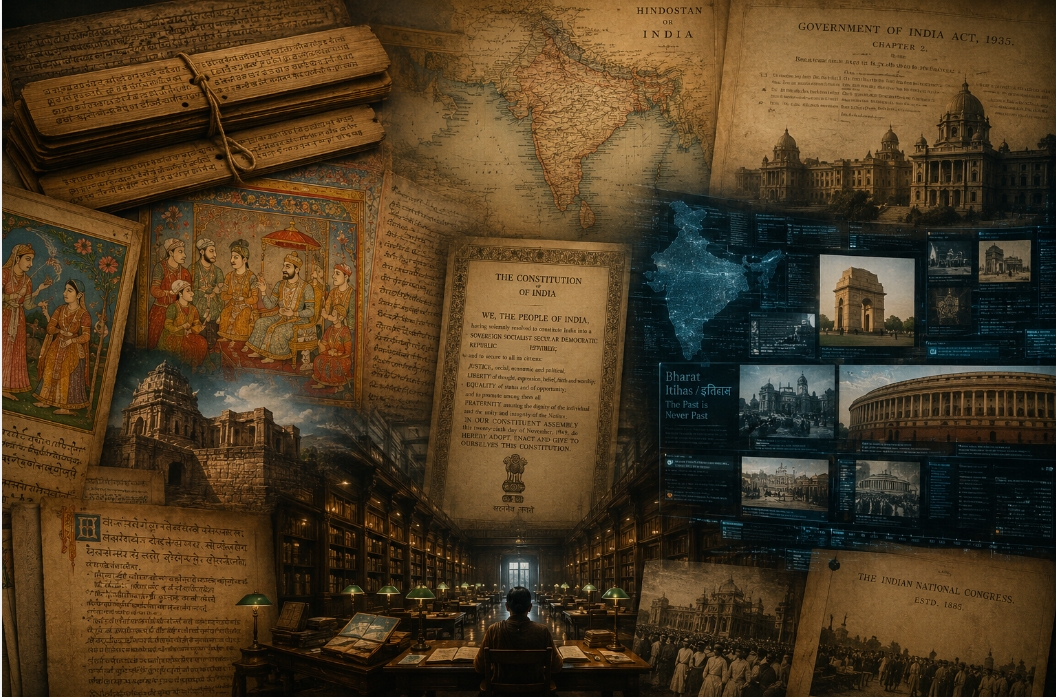
Few democracies today illustrate the politics of memory as vividly as India.
The contemporary struggle over India’s past is not merely about textbooks or monuments. It is fundamentally about political legitimacy.
Recent years have witnessed intense debates surrounding school curricula, archaeological interpretations, place-name changes, public memorials and representations of medieval India. Entire historical periods have been reframed, compressed or reinterpreted in educational material. Mughal history occupies a diminished space in many curricular revisions, while greater emphasis is placed on ancient Indian civilizations, indigenous knowledge systems and previously neglected regional traditions.
Supporters regard these developments as long-overdue corrections to colonial and postcolonial historiography, arguing that India’s intellectual and cultural achievements were systematically undervalued.
Critics argue that selective revision risks replacing one orthodoxy with another, privileging ideological coherence over historical complexity.
The issue is not whether history should be revised.
Serious historians revise history constantly.
The question is how it is revised.
Revision grounded in new evidence strengthens historiography.
Revision guided primarily by political expediency transforms historiography into ideology.
That distinction lies at the heart of every democratic society.
Manufacturing Collective Memory
George Orwell observed that those who control the past control the future.
In the twenty-first century this insight has acquired algorithmic precision.
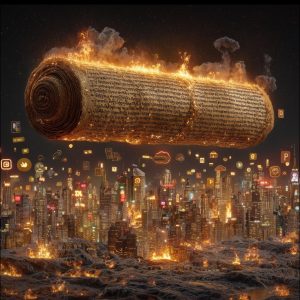
Historical consciousness is increasingly produced through WhatsApp forwards, YouTube explainers, Instagram reels and AI-generated images rather than archives or universities.
The archive has been replaced by the feed.
Digital virality privileges emotional certainty over evidentiary complexity. Nuanced scholarship rarely competes successfully against visually persuasive myths. A fabricated quotation attributed to an ancient sage may travel farther in one afternoon than decades of meticulous historical research.
Memory has become platform-dependent.
The consequence is not merely misinformation.
It is the transformation of citizenship itself.
Citizens increasingly inherit history not through critical inquiry but through recommendation algorithms.
Figure 2: Tedency to Write India’s Present in the Past
Historicism After Certainty
What, then, becomes of historicism?
Mandelbaum’s formulation remains indispensable because phenomena undeniably emerge through historical processes. Yet contemporary historicism must also become reflexive. It must ask not merely how institutions developed but how histories themselves are constructed.
Who possesses archival authority?
Whose memories survive institutional preservation?
Who decides which ruins become heritage and which disappear beneath highways?
Chakrabarty reminds us that history possesses multiple temporalities.
Guha teaches us to listen to silences.
Thapar insists upon evidence over sentiment.
White demonstrates that history is inseparable from narrative.
Benjamin warns that progress leaves debris invisible to triumphant civilizations.
Together they compel us toward a more humble historicism—one suspicious of singular truths and attentive to forgotten voices.
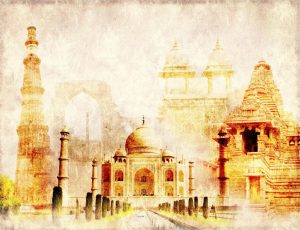
Figure 3: India’s History
The Republic of Many Histories
India’s greatest historical strength has never been unanimity.
It has been multiplicity.
Its archives contain Sanskrit epics and Persian chronicles, Buddhist inscriptions and Tamil Sangam poetry, Bhakti songs and Sufi manuscripts, colonial records and oral traditions. No single narrative can exhaust this civilizational abundance.
Attempts to compress such plurality into one authoritative national story inevitably diminish the very civilization they claim to celebrate.
History is not a monument carved permanently into stone.
It is a conversation continually rewritten by evidence, memory and dissent.
Perhaps that is why Benjamin’s Angel continues looking backward.
Not because the past imprisons us.
But because every generation inherits the ethical responsibility of deciding which histories deserve rescue before they disappear beneath the storm.
The real crisis of our age is therefore not historical ignorance.
It is historical certainty.
And democracies rarely decline because citizens forget their past.
They decline when they become convinced that only one version of it is permissible.