

When Faith Turns Against Itself: Derrida, Violence, and the Moral Crisis of Martin Scorsese’s Silence – Episode 1
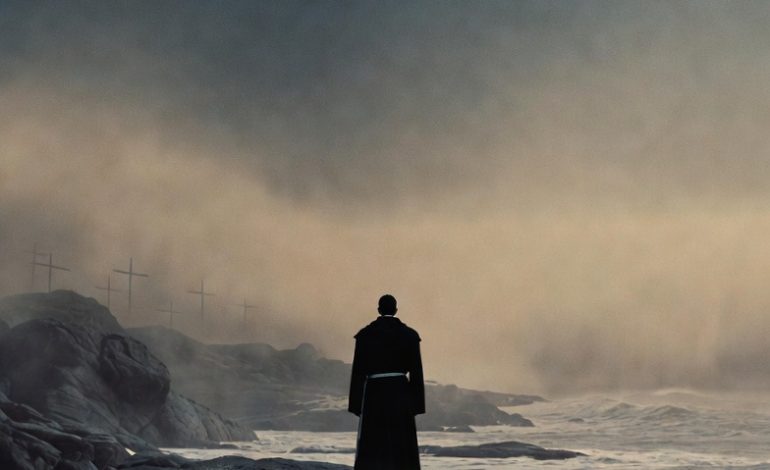

“What if the greatest test of faith is not dying for God—but living with the consequences of denying Him?”
Martin Scorsese’s Silence (2016) is often remembered as a historical drama about Christian persecution in seventeenth-century Japan. Yet beneath its breathtaking cinematography and haunting depiction of martyrdom lies a much deeper philosophical inquiry. The film refuses to offer easy answers about faith, sacrifice, or divine justice. Instead, it asks an unsettling question that lingers long after the credits roll: What becomes of faith when preserving it requires acts that appear to destroy it?
This paradox finds a remarkable philosophical companion in the work of French philosopher Jacques Derrida. In his influential essay Faith and Knowledge, Derrida challenges the conventional assumption that religion and modern reason are fundamentally opposed. Rather than viewing them as irreconcilable adversaries, he argues that both emerge from the same foundational act of trust—a primordial “fiduciary link” that precedes organized religion, political institutions, and even philosophical systems. Faith, in this sense, is not merely belief in God; it is the condition that makes every human relationship, promise, and community possible.
This insight becomes especially significant when examining Silence. Scorsese’s film is not simply about Christian perseverance under persecution. It is a profound meditation on the ethical costs of belief, the violence embedded within religious commitment, and the impossible choices that arise when compassion and doctrine collide. Rather than celebrating martyrdom as an unquestionable virtue, the film interrogates whether unwavering fidelity can itself become an act of cruelty.
Derrida’s philosophy provides an illuminating framework for understanding this moral landscape. Throughout Faith and Knowledge, he argues that religion possesses an inherent contradiction: in attempting to preserve itself, it often produces forces that threaten its own existence. He describes this paradox through the concept of autoimmunity—a term borrowed from immunology, where the body’s defense mechanisms mistakenly attack the body they are meant to protect.
Applied to religion, autoimmunity suggests that faith frequently undermines itself in its very effort to defend its sacred principles. Communities may justify persecution to preserve purity, demand sacrifice to protect belief, or embrace suffering as evidence of devotion. Ironically, these attempts to secure religion often generate the very violence that destabilizes its ethical foundations.
Scorsese’s Silence unfolds almost entirely within this autoimmune logic.
The film follows two young Jesuit priests, Sebastião Rodrigues and Francisco Garupe, who journey from Portugal to Japan after learning disturbing rumors about their revered mentor, Father Ferreira. Once celebrated as a steadfast missionary, Ferreira is said to have renounced Christianity after enduring torture and now lives openly as a Buddhist. Determined to discover the truth—and convinced that such apostasy is impossible—the young priests embark on what initially appears to be a heroic mission of spiritual rescue.
What they encounter instead is a world where faith itself has become inseparable from violence.
Hidden Christian communities survive in constant fear. Japanese authorities relentlessly hunt converts, forcing them to publicly renounce Christianity by trampling on the fumie, a bronze image of Christ. Refusal is met not only with execution but with elaborate forms of torture intended to break both the body and the spirit. Crucifixions along the shoreline, slow deaths by bleeding, and public burnings transform religious conviction into a terrifying spectacle of suffering.
At first glance, these scenes seem to portray a familiar conflict between persecutors and martyrs. Yet Scorsese complicates this narrative by shifting attention away from physical violence alone. The film’s deepest conflict emerges not from the brutality of the Japanese authorities but from Rodrigues’ growing realization that his own commitment to faith may be prolonging the agony of those he seeks to save.
This is precisely where Derrida’s critique of sacrifice becomes indispensable.
For Derrida, sacrifice is never a simple act of devotion. It represents a complex ethical economy in which something precious must always be surrendered to secure a supposedly higher good. Religious traditions have historically sanctified sacrifice—whether through ritual offerings, martyrdom, or absolute obedience—as expressions of ultimate faith. Yet Derrida questions whether this logic inevitably legitimizes violence by presenting suffering as morally necessary.
The biblical story of Abraham’s willingness to sacrifice Isaac exemplifies this dilemma. Rather than reading the narrative solely as a triumph of faith, Derrida interprets it as exposing an irreducible ethical contradiction. Abraham’s unquestioning obedience to God demands the suspension of every ordinary moral responsibility. Faith, therefore, becomes inseparable from an act that reason and ethics would otherwise condemn.
Silence reimagines this Abrahamic paradox in profoundly modern terms.
Rodrigues is never asked to sacrifice his own life. Instead, he is confronted with something far more disturbing: the suffering of innocent others. Every refusal to apostatize results in additional torture inflicted upon Japanese Christians who have chosen to protect him. Gradually, the question shifts from “Will you die for your faith?” to the infinitely more difficult “Will others continue to die because of your faith?”
This subtle transformation changes everything.
The traditional image of heroic martyrdom begins to dissolve. What initially appears as spiritual steadfastness increasingly resembles moral egoism. Is preserving one’s personal fidelity to God truly an act of holiness if it condemns countless others to unbearable suffering? Or does genuine compassion require abandoning the very public symbols of belief that religion has taught us to defend?
Scorsese refuses to resolve these questions neatly. Instead, he presents faith as an arena of ethical uncertainty, where every choice produces irreversible consequences. In doing so, the film echoes Derrida’s insistence that genuine ethical decisions never arise from simple moral rules. They emerge only within impossible situations where every available action carries both justice and violence.
This is what makes Silence far more than a historical film about religious persecution. It becomes a philosophical exploration of belief itself—one that asks whether faith reaches its highest expression not through public heroism but through private acts of compassion that appear, from the outside, as betrayal.
Martin Scorsese’s Silence encapsulates the philosophical intricacies of Jacques Derrida’s exploration of violence, sacrifice, and faith in Faith and Knowledge. Through its graphic depiction of martyrdom, apostasy, and the tension between public disavowal and private belief, the film illustrates the Derridean critique of the sacrificial economy and the paradox of autoimmunity. The Jesuit priests’ confrontation with faith’s inherent violence, as well as the silence of God in the face of suffering, embodies Derrida’s central questions about the limits of faith and the ethical challenges of religious conviction.
Chandra, S. 2026
References
Derrida, Jacques (2003). ‘Faith and Knowledge’, in Religion, ed. Jacques Derrida & Gianni Vattimo, trans. Samuel Weber. Cambridge: Polity; Foi et savoir (Paris: Seuil, 2000).
Derrida, Jacques (2001) ‘Violence and Metaphysics’, in Writing and Difference. London: Routledge; L’Écriture et la différence (Paris: Seuil, 1967).
Girard, René (1977) Violence and the Sacred, trans. Patrick Gregory. London: Johns Hopkins University Press; La Violence et le sacré (Paris: Grasset, 1972).
Moore, Gerald. “Crises of Derrida: Theodicy, Sacrifice and (Post-)Deconstruction.” Derrida Today, vol. 5, no. 2, 2012, pp. 264–82. JSTOR, https://www.jstor.org/stable/48616403. Accessed 13 Dec. 2024.
NAAS, MICHAEL. Miracle and Machine: Jacques Derrida and the Two Sources of Religion, Science, and the Media. Fordham University Press, 2012. JSTOR, http://www.jstor.org/stable/j.ctt1c5ck0n. Accessed 13 Dec. 2024.


1 Comment
[…] Source: When Faith Turns Against Itself: Derrida, Violence, and the Moral Crisis of Martin Scorsese’s Sile… […]