
Why Dystopian Fiction Keeps Coming True

“You don’t have to burn books to destroy a culture. Just get people to stop reading them.”
– Fahrenheit 451
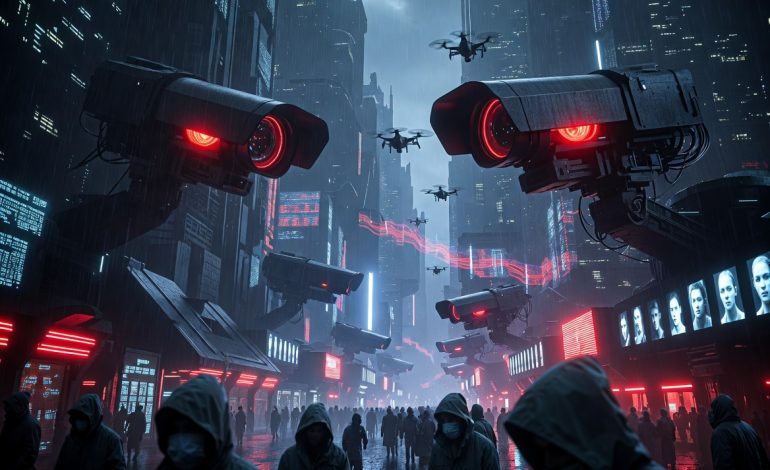
You close the book, heart pounding, and breathe a sigh of relief. Thank God that’s not our world. Then you open your phone. A notification pings: another city deploys AI-powered cameras that “predict” crimes before they happen. Your social feed algorithm has decided what outrage you’ll feel today. A politician calls facts “disinformation,” while endless streams of entertainment keep everyone scrolling, smiling, and numb.
Suddenly, that “fiction” doesn’t feel so fictional anymore. Dystopian novels aren’t just gripping stories—they’re warning systems. George Orwell, Aldous Huxley, Margaret Atwood, and others didn’t just imagine nightmares; they dissected the darkest tendencies of human power, technology, and complacency. And time after time, reality resurfaces.
But great dystopian writers do not act as fortune tellers. Rather they examine issues like detectives. They observe the world around them, notice patterns others ignore, and then pose a serious question: What happens if this pattern continues?
The All-Seeing Eye: Orwell’s 1984 in High Definition
In 1984, Big Brother watches through telescreens. Citizens rewrite history, embrace doublethink, and live in perpetual fear of the Thought Police. Sound familiar? Today, surveillance has become omnipresent and it is often voluntary. Smartphones, smart homes, and social platforms track our every movement, preference, and dissent. Governments and corporations harvest data at exceptionally larger scale. Facial recognition, predictive policing, and social credit-style systems aren’t sci-fi—they are being implemented in cities across the world.
Newspeak? Try algorithmic curation that shapes reality: echo chambers, deplatforming, and terms like “misinformation” wielded as weapons. History isn’t literally erased, but it’s memory-holed in real time—old posts vanish, context collapses, and yesterday’s consensus becomes today’s taboo.
Orwell warned of a boot stamping on a human face—forever. We’ve upgraded it to a velvet slipper with targeted ads.
Soma for the Soul: Huxley’s Brave New World
Orwell feared we would be destroyed by pain, While Huxley feared we would be destroyed by pleasure. In Brave New World, citizens are engineered for contentment, distracted by feelies, orgy-porgy, and soma. Individuality is sacrificed for stability. Consumption is king.Scroll. Like. Dopamine hit. Repeat. Our world runs on engineered distraction: infinite entertainment, wellness fads, pharmaceuticals, and algorithms optimized for engagement over truth. We don’t need state-mandated drugs when our pockets hold devices designed to hijack attention.
Consumerism and biotech blur further—designer genetics on the horizon, while social status ties to online validation. The elite enjoy sophisticated pleasures; the masses get bread, circuses, and personalized content. We love our servitude because it’s comfortable, convenient, and curated.
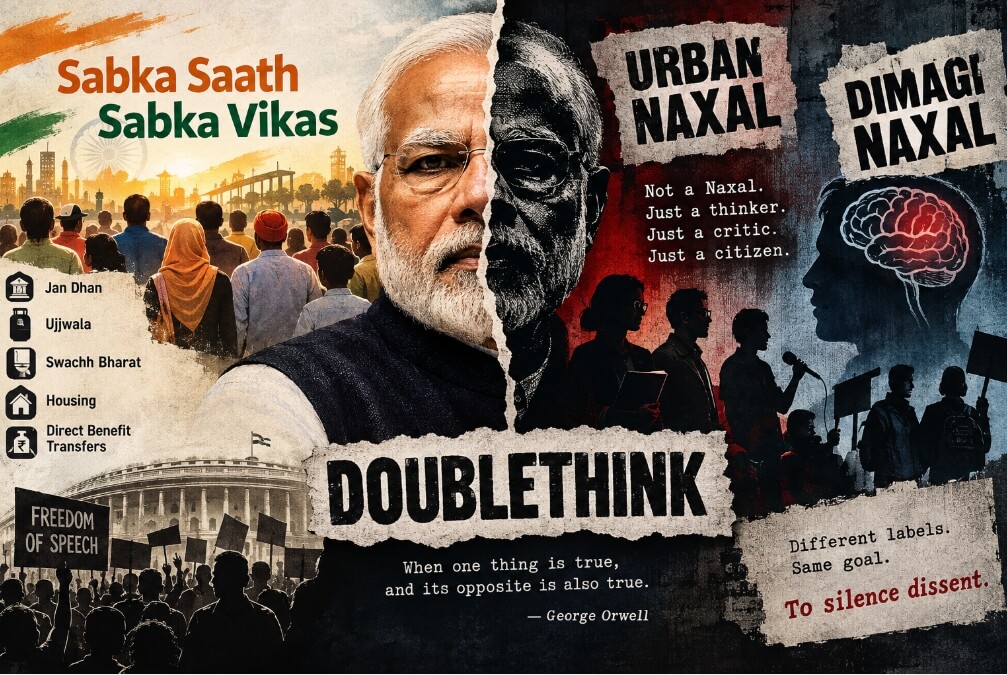
Note: Soma is a powerful, government-issued hallucinogenic drug that induces instant happiness, euphoria, and emotional numbness without any hangover or side effects, just like the incumbent Indian government and government backed media (Godi media or Modi media) provide toxic dose of religion to citizen every day.
Bodies as Battlegrounds
The Handmaid’s Tale and Control Margaret Atwood’s Gilead strips women of autonomy, reducing them to reproductive vessels under religious authoritarianism. Atwood has always insisted: nothing in the book hadn’t already happened somewhere.
Reproductive rights remain fiercely contested. In places, women face restricted healthcare, forced roles, or outright gender apartheid. Broader controls over bodies, speech, and identity echo the tale’s rigid hierarchies and ritualized power.
The novel’s genius lies in its banality—how normal people and incremental policies enable horror.
Why Does This Keep Happening?
Dystopias endure because they exaggerate us. Human nature craves security, belonging, and pleasure. Power structures—whether governments, corporations, or ideologies—exploit these. Technology supercharges it all: AI surveillance, algorithmic manipulation, digital identities.
Fiction doesn’t predict exact futures; it reveals trajectories. We ignored the warnings, or worse, found them entertaining. As one observer noted in 2026 discussions, this feels like the year dystopian fiction hits hardest—because the mirror is unflinching.
The Flicker of Hope
The greatest dystopian authors understood something timeless: civilizations are built from human decisions, and human decisions are shaped by recurring fears, ambitions, desires, and blind spots. Dystopias aren’t prophecies set in stone. They’re cautionary tales. The characters who resist—Winston’s fragile rebellion, John the Savage’s disgust, Offred’s quiet defiance—remind us that awareness is the first crack in the system. We still have choices. Question the algorithms. Protect privacy. Defend truth over narrative. Prioritize real human connection over digital soma or religious soma. Read, think critically, and speak—even when it’s uncomfortable.
Chandra, D. 2026
References
Bernstein, A.L. 2026. 2026 is the Year of Dystopian Fiction [online] https://amylbernstein.medium.com/2026-is-the-year-of-dystopian-fiction-5d99a4dcb326
Caroll, L. 2025. Everything In Handmaid’s Tale Has Already Happened [online] https://historyofwomen.substack.com/p/everything-in-handmaids-tale-has
Ferme, J. 2026. The Future Surveillance Dystopia [online] https://courage.media/2026/02/04/the-future-surveillance-dystopia/
Oppenheim, M. 2025. We’re Living The Story ‘The Handmaid’s Tale’ Warned Us About – These Are The Women Fighting Back [Online] https://www.service95.com/handmaids-tale-parallels-womens-rights-today
Yaziji, M. 2025. AI carries the threat of bringing to life the chilling visions of Orwell and Huxley. We must work hard to fight against the convergence of micro-surveillance and digital inertia. [online] https://www.imd.org/ibyimd/artificial-intelligence/big-brother-or-a-brave-new-world-how-to-avoid-ai-dystopia/
Sunstein, 2026. 1984 and Brave New World [online] https://casssunstein.substack.com/p/1984-and-brave-new-world