
What I See

You ask me what I see.
I see fires raging—
not in forests,
but beneath the skin of silence.
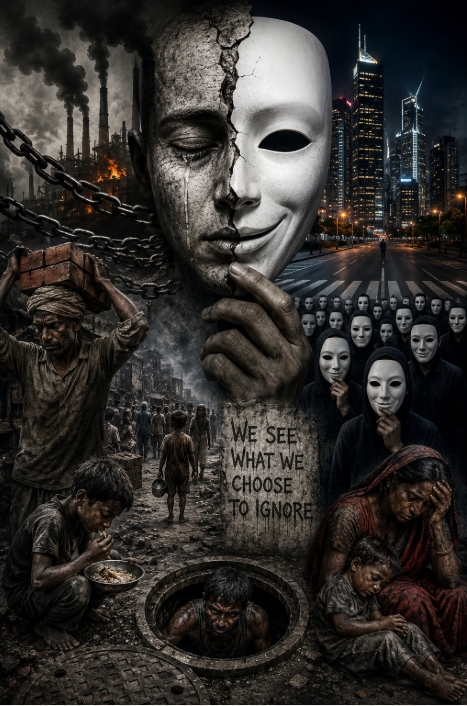
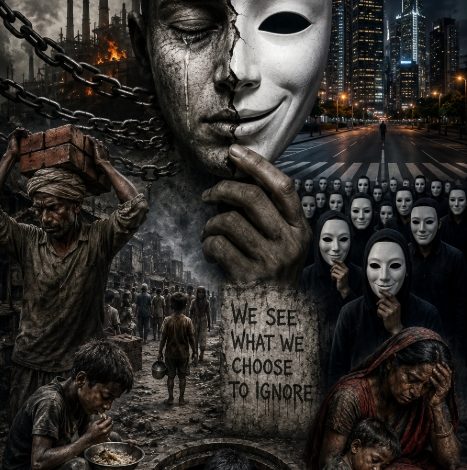
I see chains clasped around necks,
forged not of iron,
but of fear, hunger,
and generations of invisible servitude.
I see tears tracing dusty paths
along a labourer’s weary face,
vanishing into the earth
before anyone thinks to notice.
I see chaos without thunder,
grief without funerals,
agony woven into the ordinary.
I see eyes lowered—
not in humility,
but in exhaustion,
begging for dignity more than mercy.
I see hunger breeding poverty,
poverty breeding despair,
and despair, abandoned long enough,
learning the language of crime.
I see people surrendering
to lives they never chose,
mistaking survival
for living.
I see roads emptied of footsteps,
streets echoing with absence,
while fields stretch toward the horizon,
their harvest swallowed
by untended weeds.
I see familiar faces
hidden behind borrowed masks—
a grand masquerade
where every smile conceals a wound,
every confession arrives too late,
and remorse lingers
like smoke after the flames.
I see you.
I see me.
I see forgotten corners beneath our cities,
where darkness is not the absence of light
but the presence of neglect.
There,
the deprived inherit shadows,
raising families where hope
barely survives the night.
They are denied
both the freedom to live
and the luxury to surrender.
Responsibilities weigh upon their shoulders
until even breathing
becomes another duty.
I see them walking
an endless, unforgiving road,
their bodies fractured by labour,
their stomachs hollow with hunger,
their dreams worn thin by waiting.
Yet still they walk.
For sometimes,
hope is no longer a dream of a better tomorrow—
only the quiet wish
to take one’s final breath
surrounded by those
who carried the same burden.
And this is what I see.
The tragedy is not that it exists.
The tragedy is that we have learned
to look at it
without truly seeing.
Sanya, Chandra