
When Home Becomes a Haunted House: Reading In the Dream House

“Love cannot be won or lost; a relationship doesn’t have a scoring system. We are partners, paired against the world. We cannot succeed if we are at odds with each other.” ― Carmen Maria Machado, In the Dream House
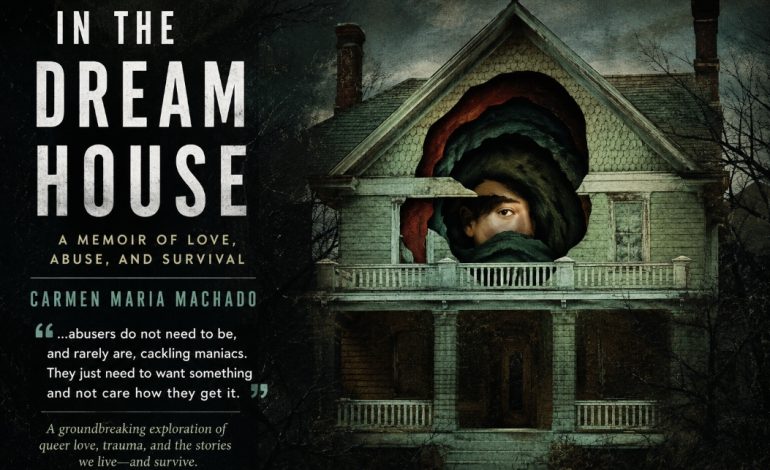
“…abusers do not need to be, and rarely are, cackling maniacs. They just need to want something and not care how they get it.” ― Carmen Maria Machado, In the Dream House
“Places are never just places in a piece of writing. If they are, the author has failed. Setting is not inert. It is activated by point of view.”
― Carmen Maria Machado, In the Dream House
What if the place you once imagined as your safest refuge slowly became the site of your deepest fear?
That is the unsettling question that lingers long after finishing In the Dream House by Carmen Maria Machado. This is not a conventional memoir. It is a labyrinth—a story that refuses to move in a straight line because trauma itself rarely does. Machado invites readers into the “Dream House,” a space that begins as a promise of love and domestic bliss before revealing itself as something far darker: a prison built not with walls, but with manipulation, silence, and psychological control.
Rather than recounting abuse chronologically, Machado reconstructs it through fragments, fairy tales, horror, folklore, legal records, and even comedy. Every chapter reinvents itself, mirroring the fractured way memory survives trauma. The result is a memoir that feels as haunting as a gothic novel while remaining painfully grounded in lived experience.
At its heart, In the Dream House dismantles familiar assumptions about domestic violence. Popular culture often imagines abuse as visible bruises, explosive rage, or relationships that fit neatly into heterosexual narratives. Machado challenges these expectations by documenting emotional abuse within a same-sex relationship, exposing forms of violence that are often dismissed, misunderstood, or erased altogether.
One of the memoir’s most unsettling revelations is its refusal to create obvious villains. Machado reminds us:
“…abusers do not need to be, and rarely are, cackling maniacs. They just need to want something and not care how they get it.”
It is this uncomfortable truth that gives the memoir its extraordinary power. Abuse is shown not as a series of dramatic outbursts, but as a slow erosion of autonomy, where affection and fear become impossible to separate.
The “Dream House” itself becomes more than a physical location. It transforms into a psychological landscape where memory, desire, terror, and hope coexist. Machado’s fascination with setting is captured beautifully when she writes:
“Places are never just places in a piece of writing. If they are, the author has failed. Setting is not inert. It is activated by point of view.”
Every room, hallway, and doorway carries emotional weight. The house changes as the relationship changes, reflecting the narrator’s shifting perception of reality. Home ceases to be a sanctuary and becomes an archive of invisible wounds.
Yet this memoir is not only about suffering. It is equally about survival and reclamation. Writing becomes Machado’s act of resistance against erasure—both personal and cultural. She fills the silence surrounding queer domestic abuse, documenting experiences that have too often been ignored because they do not fit conventional narratives of victimhood.
Perhaps the memoir’s greatest achievement is its insistence that love should never resemble competition or conquest. Machado offers a simple but profound reminder:
“Love cannot be won or lost; a relationship doesn’t have a scoring system. We are partners, paired against the world. We cannot succeed if we are at odds with each other.”
In a book overflowing with uncertainty, this idea feels like a quiet anchor.
Reading In the Dream House is not always comfortable, nor is it meant to be. It unsettles, disorients, and challenges the reader to confront uncomfortable truths about memory, identity, and the many faces of abuse. Machado transforms her personal history into something larger—a collective testimony that speaks not only to survivors but to anyone interested in the complicated architecture of love, power, and survival.
Some books tell a story. In the Dream House reconstructs one from shattered pieces, proving that sometimes the bravest act is not escaping the haunted house—but returning to it, lantern in hand, so others can finally see what was hidden inside.
Chandra, S. 2026