

Selling Ramrajya Model of Governance in 21st Century
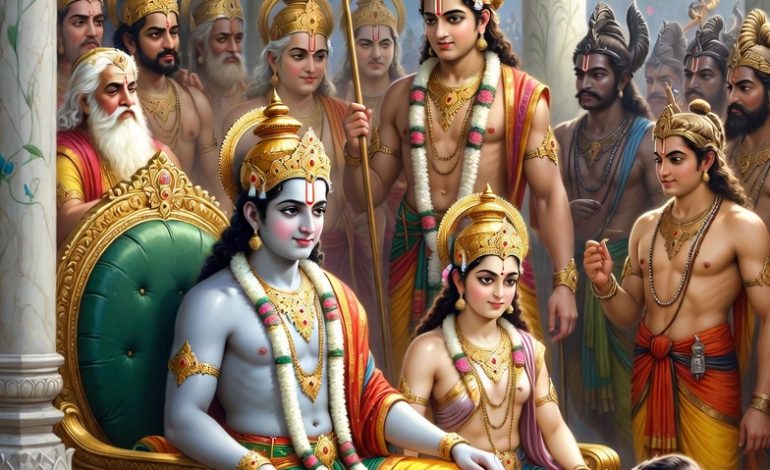

“Theocracy is the most dangerous form of government… because the only thing worse than a tyrant is a tyrant who thinks they’re on a mission from God.”
— James Talarico
Background
On 15 August 1947, in his famous midnight speech, ‘Tryst with destiny’ Pandit JawaharLal Nehru proclaimed “At the stroke of the midnight hour, when the world sleeps, India will awake to life and freedom” (The Hindustan Times, 2018). With this esteemed and auspicious proclamation of Pandit Nehru, India entered in the new era of governance. Over the past seven decades of its independence from colonial rule, India has made fairly decent progress and proved her critics like John Strachey wrong who believed that “there is not, and there never was an India”. Many predicted India will fail as a nation but not her races and religion (Guha, 2007). Over the past seven decades, India has not only made remarkable economic progress but also became a cohesive force that supports people from different caste, creed and ethnicity. Today India is home to more than 780 languages and 66 scripts (Narayan, 2017). In its 74 years journey of independence, India can take pride in its several achievements including its fastest growing economy, a largest, vibrant and successful model of democracy and becoming a force to reckon with in nuclear power and space. India has been also successful in lifting millions of people out of poverty and addressing myriad internal and external challenges since its independence (De, 2019). Despite notable achievements, incidence of poverty has remained highest in India. According to a report prepared by the Oxford Poverty and Human Development Initiative and the United Nations Development Programme (UNDP), India has 364 million poor which is the largest for any country (The Indian Express, 2019). Moreover, the caste system has continued to remain deeply entrenched in Indian society for centuries which has obscured economic, cultural and social growth of Indian citizens (Macwan, 2021). Religious animosity has become a new normal in India and how it can inflict barbarism and disruption in the lives of people can be comprehended from Delhi riots that amplified the eminent fault-line of the Indian society (Yasir and Perrigo, 2020). In such as pretext, the idea of Ramarajya has been hailed as new panacea of governance challenges of India. What is Ramarajya paradigm of governance? What promises it makes to solve complex problems of post-modern India?
Revisiting Ramrajya as Model of Governance
For ages, models of good governance have continued to receive attention and scrutiny from decision makers, policy planners, political thinkers and academicians. In simplest terms, the concept of governance can be defined as the process of decision making and its implementation. The term governance in today’s context is applied in several contexts such as national governance, local governance, international governance, corporate governance and so on. The Ramarajya model of governance as encapsulated in Ramayana claims to possess all characteristics of true democracy. The concept of Ramarajya in context of modern India is not new as it was initially pitched by architecture of India’s freedom struggle, Mahatma Gandhi. Gandhi considered Ramarajya not as a kingdom ruled by a Hindu ruler. Rather his romanticism with Ramarajya was founded on the premise that it was the kingdom ruled by god himself. Despite the fact that Ramarajya lacked the electoral procedure of modern democracy, its governance system encapsulated the very essence of a true democratic system. All citizens enjoyed equality and equal opportunities of development. All citizens were equal in the eyes of law irrespective of their societal status. Ramarajya lacked any written constitution but the public opinion was given due importance in the governance. People have complete freedom over socio-religious subjects and practices. More importantly, Ramarajya was founded on the highest ethical and moral standards (Hema, 2010).
However, many political thinkers argue that Gandhi’s concept of ‘Ramarajya’ and gram ‘Swaraj ‘is merely a utopian Idea because that is only a distant dream and nearly impossible to achieve it. Rama occupies a special place in the hearts of millions and therefore, Gandhi used the idealism of Rama to reach people of diverse backgrounds and caste. In Young India (19 September 1929), Gandhi admitted, “By Ramrajya I do not mean Hindu Raj. I mean by Ramrajya Divine Raj, the kingdom of God… whether Rama of my imagination ever lived or not on the earth, the ancient deal of Ramrajya is undoubtedly one of true democracy in which the meanest citizen could be sure of swift justice without an elaborate costly procedure. Even the dog is described by the poet to have received justice under Ramrajya” (Jana, 2019).
Does Ramrajya Model of Governance Addresses Challenges of 21st century
Over the past 74 years, India has progressed as a vibrant constitutional democracy (Mint, 2017) and made rapid strides and achievements in several domains including preserving the status of the largest democracy, institutional development, space and research, sports, art and culture, the world’s largest network of railway, status of nuclear power, green revolution, white revolution, winning successive wars against arch rival Pakistan and liberation of Bangladesh and many others. India also proved its capability by holding global sporting events such as Asian games and commonwealth games and successful space missions such as Chandrayaan (1), Chnadrayaan (2), Mars Orbiter Mission and some others. In the post-independence era, India has treaded on an arduous path as a nation and effectively addressed myriad domestic and international challenges. The country has withstood multiple misadventures from its neighboring countries such as China and Pakistan (De, 2019). Despite countless challenges, India has continued to tread on the path of development and carrying forward the legacy of the world’s oldest civilization. The Supreme Court verdict on Ram Temple in Ayodhya demonstrates how the society bestows its faith in Judiciary to find solutions to complex problems (Varma, 2020). It is also true that despite notable progress and development in the post independence era, India has grossly underperformed in terms of poverty alleviation and providing access to justice and dignity to the poorest. Mahatma Gandhi writing in Young India affirmed, “I shall work for an India in which the poorest shall feel that it is their country, in whose making they have an effective voice” (Aiyar, 2013). But today’s India only echoes that Mahatma’s dream of Swaraj is still elusive. Does it imply that India shall revisit its model of governance and explore the possibility of Ramarajya.
It is important to recognize that the very soul and spirit of India in the post-independence era has remained guided and enlightened by the spirit of constitutionalism. Importantly, India’s constitution embodies the idealism of Ramarajya. Part III of the Indian Constitution, which enlists and explains fundamental Rights, starts with a painting of Ram Sita and Lakshman. Indian constitution grants freedom to individuals from all forms of discrimination. Through article 14, Indian constitution grants equal rights to rich, poor, powerful or weak before the eyes of law. Article 15 further provides that all citizens shall receive equal treatment by the state, institutions and individuals (Surya and Pande, 2021). Shashi Tharoor, a famous parliamentarian of Indian National Congress (INC) party laments that India has borrowed the Parliamentary system of governance from the British but it has not worked well in the Indian conditions because of several factors. He argues that the Parliamentary system has largely produced a unique breed of unqualified legislator, who is only interested in wielding executive power rather than focusing on policy, performance and accountability. The parliamentary system has created legislators who shift their alliance just to fulfill their self serving interest rather than interest of the country (The Indian Express, 2020).
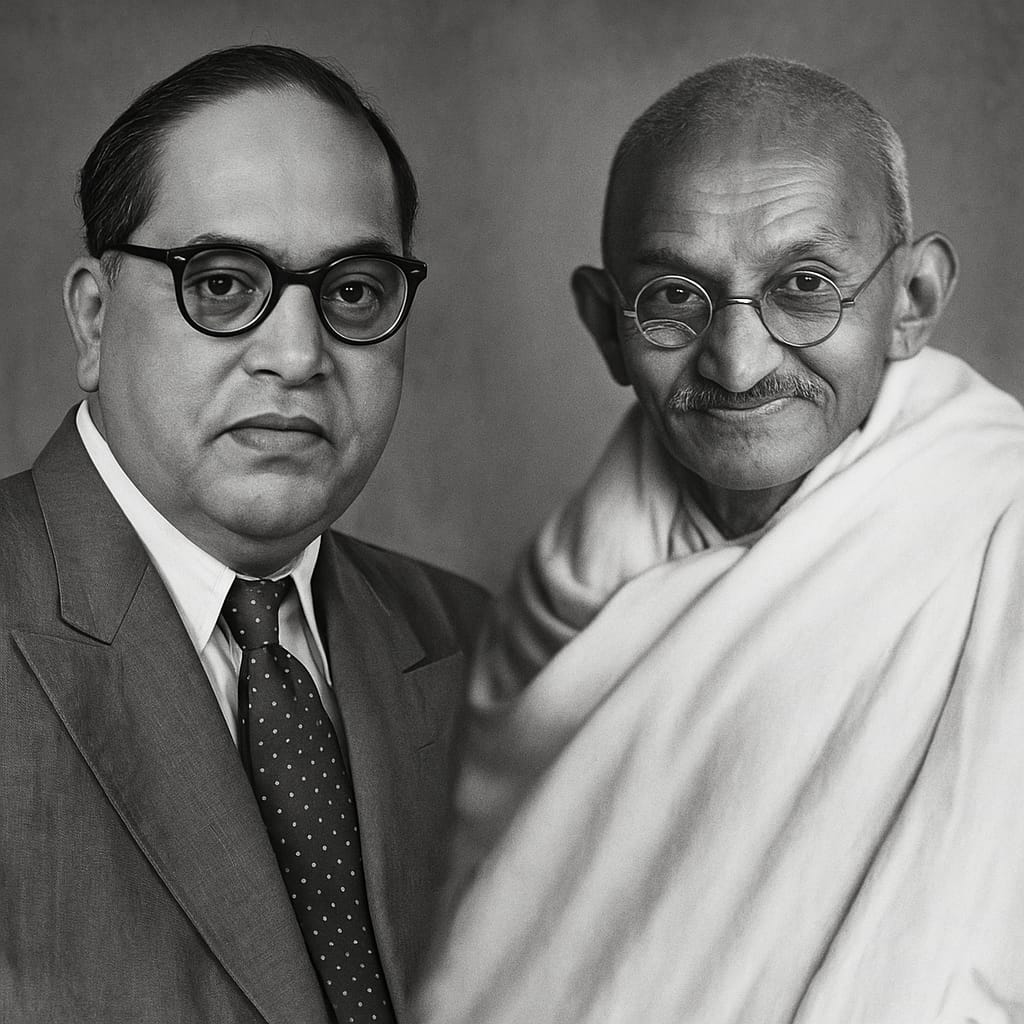
It is true that the parliamentary system of democracy in India has failed to deliver expected performance on constitutionalism. Does that mean India should wholeheartedly embrace the elusive governance model of Ramarjya which was innately devoid of constitution? It is also intriguing to ponder that Ramarajya model of governance worked well when the god himself ruled a territory in this universe. Success of Ramrajya was conditioned by the leadership qualities of lord Ram. The Story of Ram is celebrated in many countries of SouthEast Asia (Varma, 2020). But it is equally relevant to ponder that America achieved the status of most advanced nation and thriving model of democracy without the incidence of Ramarjya model of governance in its history. Success of democratic model of governance thrives on quality of leadership. Ideals of Ram need to be seen as an inspiration for political leaders to emulate leadership qualities of Ram to bring societal change. Mahatma Gandhi said that real Swaraj will not come merely by acquiring authority. Rather developing capacity to question and resist all form of authority that challenges individual’s sovereignty. Sovereignty of a nation as well as the sovereignty individual needs to be recognized as necessary precondition of Swaraj. In his book the inhalation of caste, Dr Ambedkar questions eligibility of Indians to seek freedom from British when they have already enslaved a dominant chunk of people for centuries. Dr. Ambedkar asserts that change in political order and political reform is preceded by social reform. For example, Chandrgupta’s political revolution was preceded by social reform of Budha. Similarly, political revolution of Sikh was preceded by Guru Nanak Dev’s social reform. Dr Ambedkar argues that India has not fulfilled precondition of political reform because Indian society is still unmindful of granting even human status to untouchables (Ambedkar, 1994). Removing untouchability remained also a shared dream of Mahatma Gandhi, a chief architect and soul of India’s freedom struggle. Sadly, untouchability and poor condition of low caste people still remain a governance challenge of post modern India.
Conclusion
Selling Ramarajya model of governance in 21st century can be also driven by the covert motive of establishing totalitarian regime based on religious premise. History provides ample evidence that mixing religion and politics can create inflammatory leadership and statesmanship (Vedantam, 2016). Selling Ramrajya model of governance cannot address pertinent gaps present in India’s existing parliamentary form of Democracy. India is still a learning model of democracy but it shown the world that democratic model of governance can thrive well in Asia. The need of hour is to fine tune the existing parliamentary model of democracy in India, constitutionalism because basic feature of Ramarajya are already embedded in the Indian constitution. Creating avenues for the leadership development and following ideals of Ram are equally important because competent leaders equipped with good moral character can provide more suitable vision and direction for the country to deliver well on the constitutionalism.
Ramrajya is timeless but it does not address evolving challenges, including democracy, technology, globalization, and more complex challenges like climate change, inequality, AI, and pluralism. Talking about Ramrajya is only about reviving theocracy covertly.
References
Aiyar, M.S. 2013. Gandhi’s dream, The Telegraph [online] https://www.telegraphindia.com/india/gandhis-dream/cid/269620
Ambedkar, B.R. 1994. Annihilation of caste with a reply to Mahatma Gandhi, 3rd edition Google book https://www.google.co.in/books/edition/Annihilation_of_Caste/Eio8BQAAQBAJ?hl=en&gbpv=1&dq=ambedkar+ideology&printsec=frontcover
De, A. 2019. Independence Day: 73 events that define India’s journey from 1947 to 2019, The Indian Express [online] https://indianexpress.com/article/india/independence-day-2019-events-that-define-indias-journey-from-1947-to-2019-5906068/
Guha, R. 2007. An unlikely nation, NewStatesman [online] https://www.newstatesman.com/asia/2007/08/democratic-india-british
Hema, D. 2010. Good Governance Models from Ancient India and their Contemporary Relevance – A Study, IBA Journal of Management and Leadership, Vol 2(1), pp. 75-88.
Himansu, 2020. Freedom struggle was also about combating poverty — there has been a setback, The Financial Express [online] https://indianexpress.com/article/opinion/columns/british-colonialism-independence-economic-growth-poverty-in-india-6555157/
Jana, J. 2019. Swaraj and Ramrajya, The Statesman [online] https://www.thestatesman.com/opinion/swaraj-and-ramrajya-1502796351.html
Macwan, D. 2021. Why we must annihilate caste to save Indian democracy [online] https://www.theleaflet.in/why-we-must-annihilate-caste-to-save-indian-democracy/
Mint, 2017. 70 years in Indian Politics and Polices [online] https://www.livemint.com/Politics/QYaohpsFZCqbxR1lrcy4JK/70-years-in-Indian-politics-and-policy.html
Narayan, H. 2017. India, a land of many tongues, The Hindu [online] https://www.thehindu.com/thread/arts-culture-society/india-a-land-of-many-tongues/article19445187.ece
Surya, T. and Pande, S. 2021. Why painting of Ram in India’s Constitution matters, The Print [online] https://theprint.in/opinion/why-painting-of-ram-in-indian-constitution-matters/592160/
The Indian Express, 2020. Explained Ideas: Why it’s time for India to adopt the presidential form of government [online] https://indianexpress.com/article/explained/shashi-tharoor-presidential-system-parliament-6522482/
The Indian Express, 2019. India has highest number of poor despite 27 crore moving out of poverty in 10 years: report [online] https://indianexpress.com/article/explained/india-poverty-minimum-income-5644342/
The Hindustan Times, 2018. ‘A new star rises’: Jawaharlal Nehru’s speech on the birth of independent India [online] https://www.hindustantimes.com/india-news/a-new-star-rises-jawaharlal-nehru-s-speech-on-the-birth-of-independent-india/story-fT9JIPYpMnz2OkRUgGNIZP.html
Varma, A. 2020. India, the oldest civilization, is finally being able to establish its identity, The Times of India [online] https://timesofindia.indiatimes.com/blogs/no-free-lunch/india-the-oldest-civilization-is-finally-being-able-to-establish-its-identity/
Vedantam, 2016. Religion and politics, a deadly cocktail, Deccan Herald [online] https://www.deccanherald.com/content/537826/religion-politics-deadly-cocktail.html
Yasir, S. and Perrigo, B. 2020. ‘Hate Is Being Preached Openly Against Us.’ After Delhi Riots, Muslims in India Fear What’s Next, TIME [online] https://time.com/5794354/delhi-riots-muslims-india/


1 Comment
[…] फिर भी यह भी सच है कि गरीबी, सामाजिक असमानता, भ्रष्टाचार, जातीय भेदभाव, न्याय तक समान पहुँच और नैतिक नेतृत्व जैसे प्रश्न आज भी पूरी तरह समाप्त नहीं हुए हैं। ऐसे समय में अक्सर एक शब्द चर्चा में आता है—रामराज्य। […]